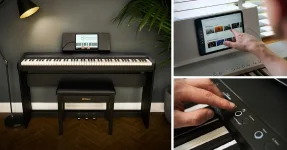
Piano Sphere gives FP-40 owners 100 songs and three guided courses before any paid upgrade enters the picture. Roland also includes personalized plans, progress tracking, streaks, rewards, tempo controls, and integrated playing feedback in the basic Piano Sphere experience.
Premium matters when you want a much larger content pool, not when you simply want the Roland FP-40 and Piano Sphere system to work as advertised. Roland describes the free version as a complete playing experience with no ongoing subscription required.
Personalization is not presented as a Premium-only perk. Piano Sphere builds a plan around your level, musical interests, and pace, while the Home area keeps your active songs, courses, practice activity, statistics, rewards, and recommendations in one place.
Practice tools remain part of the everyday experience too. You can slow a song down, loop difficult passages, build streaks, use streak freezes, and earn badges for consistency or course completion. The FP-40 can even record playing time while the app is closed, so your activity history does not depend on remembering to open Piano Sphere before every session.
Real-time feedback is also central to the FP-40 integration. Roland presents the illuminated Piano Sphere button and its response to difficult passages as a defining feature of the system, rather than an extra locked behind Premium. For a new owner, the useful baseline is therefore larger than “100 free songs” suggests.
The difference matters because a subscription can sound mandatory when an app sits so close to the identity of a new digital piano. Here, the piano does not lose its core learning loop when you decline Premium. You still have structured courses, practice tracking, recommendations, feedback, and a substantial starter library.
Whether Premium earns its place depends heavily on how you practice. Someone working carefully through a modest set of pieces may get months of use from the included material, especially when passages are repeated, slowed down, and revisited instead of treated as disposable content.
A player who wants constant song turnover will hit the limits sooner. Large catalogs are useful when musical variety keeps you at the keyboard, but quantity alone does not improve practice. A 2026 paper on self-regulated music practice frames effective practice around planning, execution, and reflection, which is a better lens for judging whether more material will actually help you.
Roland’s own setup guide tells users to open the Premium tab inside Piano Sphere and select a subscription option there. Checking that screen before paying is important because it is where the current terms should be presented alongside the purchase, rather than relying on a search snippet or an unlabeled store price.
This pricing detail also separates the cost question from the usefulness question. You do not need to decide whether Premium is worthwhile on the day you buy the FP-40. The free material is available first, which means you can see how often you use Piano Sphere, which courses fit, and whether the 100-song selection actually feels restrictive.
A sensible breakpoint arrives when the included library starts limiting what you want to learn rather than merely looking smaller on paper. If you are still working through the free courses and returning to the same pieces to fix timing, fingering, or reading, a four-digit catalog does not solve a current problem.
Premium becomes easier to justify when the content ceiling is the problem itself. You may want more repertoire at your level, more choices that match your taste, or enough fresh material to keep regular practice from going stale. Until then, Piano Sphere’s free tier remains a functioning learning environment rather than a demo waiting for payment.
Premium matters when you want a much larger content pool, not when you simply want the Roland FP-40 and Piano Sphere system to work as advertised. Roland describes the free version as a complete playing experience with no ongoing subscription required.
The free tier already does the core learning work
The included 100-song library mixes licensed material with copyright-free pieces, covering pop and classical music. Piano Sphere also starts you with three courses aimed at different skill levels, with theory, technique, and sight-reading material built into the course structure.Personalization is not presented as a Premium-only perk. Piano Sphere builds a plan around your level, musical interests, and pace, while the Home area keeps your active songs, courses, practice activity, statistics, rewards, and recommendations in one place.
Practice tools remain part of the everyday experience too. You can slow a song down, loop difficult passages, build streaks, use streak freezes, and earn badges for consistency or course completion. The FP-40 can even record playing time while the app is closed, so your activity history does not depend on remembering to open Piano Sphere before every session.
Real-time feedback is also central to the FP-40 integration. Roland presents the illuminated Piano Sphere button and its response to difficult passages as a defining feature of the system, rather than an extra locked behind Premium. For a new owner, the useful baseline is therefore larger than “100 free songs” suggests.
Premium mainly buys a much larger pool of material
Roland says upgrading expands Piano Sphere to more than 1,000 songs and lessons. Its current setup guidance describes Premium as adding more songs, learning resources, and features, so the paid tier is best understood as an expansion once the included catalog starts feeling small.The difference matters because a subscription can sound mandatory when an app sits so close to the identity of a new digital piano. Here, the piano does not lose its core learning loop when you decline Premium. You still have structured courses, practice tracking, recommendations, feedback, and a substantial starter library.
Whether Premium earns its place depends heavily on how you practice. Someone working carefully through a modest set of pieces may get months of use from the included material, especially when passages are repeated, slowed down, and revisited instead of treated as disposable content.
A player who wants constant song turnover will hit the limits sooner. Large catalogs are useful when musical variety keeps you at the keyboard, but quantity alone does not improve practice. A 2026 paper on self-regulated music practice frames effective practice around planning, execution, and reflection, which is a better lens for judging whether more material will actually help you.
The public price listing leaves one detail unclear
The U.S. App Store currently shows two Piano Sphere Premium in-app purchases at $59.99 and $149.99. The public listing does not identify the billing period attached to either price, so assigning one price to a particular duration from the numbers alone would be guesswork.Roland’s own setup guide tells users to open the Premium tab inside Piano Sphere and select a subscription option there. Checking that screen before paying is important because it is where the current terms should be presented alongside the purchase, rather than relying on a search snippet or an unlabeled store price.
This pricing detail also separates the cost question from the usefulness question. You do not need to decide whether Premium is worthwhile on the day you buy the FP-40. The free material is available first, which means you can see how often you use Piano Sphere, which courses fit, and whether the 100-song selection actually feels restrictive.
A sensible breakpoint arrives when the included library starts limiting what you want to learn rather than merely looking smaller on paper. If you are still working through the free courses and returning to the same pieces to fix timing, fingering, or reading, a four-digit catalog does not solve a current problem.
Premium becomes easier to justify when the content ceiling is the problem itself. You may want more repertoire at your level, more choices that match your taste, or enough fresh material to keep regular practice from going stale. Until then, Piano Sphere’s free tier remains a functioning learning environment rather than a demo waiting for payment.