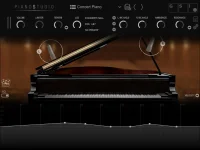
GSi Piano Studio requires iPadOS 16 or later and does not include an on-screen piano keyboard for playing notes. You need a physical MIDI keyboard, which changes the setup from a casual touchscreen app into a small hardware-and-software instrument rig.
GSi’s current listing suggests a ninth-generation iPad or newer for stronger full-polyphony performance. Older hardware may still run the app, but the practical limit appears when sustained notes, resonance, effects, and host processing pile up at once. A clean install tells you very little about how the rig behaves under pressure.
Version 1.1.0 also adds GSi Piano Studio's adjustable polyphony and half-pedal controls, which give mobile players useful ways to balance response against available processing power. Set the keyboard and audio path first, then tune those controls around the device you actually own.
Use the same controller you intend to practice or perform with. A weighted keyboard, compact controller, and synth-action board can send noticeably different velocity patterns even when every one of them reaches MIDI velocity 127 on paper. Piano Studio includes customizable velocity curves, so match the curve to your hands before deciding whether the modeled piano feels too dull or too aggressive.
Continuous sustain deserves its own check if your pedal supports half-pedaling. Version 1.1.0 adds a global half-pedal option, while the app also supports re-pedaling. Confirm the controller is actually sending continuous pedal values before blaming the piano for behaving like a simple on-off switch.
Connection stability matters as much as note recognition. Avoid building a live setup around a flaky hub, loose adapter, or controller that intermittently disappears when the iPad starts charging other hardware. One boring ten-minute stress test can save a much uglier surprise onstage.
AUv3 becomes useful when the piano needs to live inside a larger iPad session with effects, other instruments, recording, or more flexible routing. The cost is shared processing headroom. A setup that feels effortless alone can become unstable once the host is also running reverbs, mastering processors, virtual instruments, MIDI tools, and recording tracks.
Latency deserves attention before adding more sound design. Research on action-to-sound latency in digital instruments found that delayed auditory feedback affects perceived instrument quality and performance behavior, which fits the basic experience of playing a piano from a physical keyboard. Keep the audio buffer low enough to feel immediate, but not so low that the system begins crackling.
Change one performance setting at a time. If a hosted session struggles, bypass heavy effects first, then compare buffer size and Piano Studio's polyphony setting using the same demanding MIDI passage. Randomly changing four settings together may fix the noise while leaving you with no idea which adjustment actually mattered.
Test the exact AUv3 host session you plan to use, not a stripped-down imitation. Keep your normal reverb, routing, other instruments, and controller connected, then play the busiest section of the material several times. Watch for crackles, delayed notes, clipped tails, interface sluggishness, or MIDI that stops responding cleanly.
Full polyphony should stay enabled only when the iPad handles it comfortably. Dropping to a lighter polyphony option is sensible if sustained passages remain musically intact and the change removes instability. More voices on a settings page are not worth much when the audio breaks during the song.
Save separate configurations for standalone practice and hosted work if they need different buffers or polyphony choices. Keep a known stable program for live playing, especially when half-pedal, external MIDI, and AUv3 routing are all involved. The strongest iPad setup is the one you have already pushed hard enough to trust.
GSi’s current listing suggests a ninth-generation iPad or newer for stronger full-polyphony performance. Older hardware may still run the app, but the practical limit appears when sustained notes, resonance, effects, and host processing pile up at once. A clean install tells you very little about how the rig behaves under pressure.
Version 1.1.0 also adds GSi Piano Studio's adjustable polyphony and half-pedal controls, which give mobile players useful ways to balance response against available processing power. Set the keyboard and audio path first, then tune those controls around the device you actually own.
A physical MIDI keyboard is part of the instrument
The missing screen keyboard is not a minor interface quirk. Piano Studio expects note input from external MIDI hardware, so your first test should confirm that the iPad sees the controller, the app receives notes across the full range, and sustain messages arrive correctly. Check velocity too because a connection can work while the playing response still feels wrong.Use the same controller you intend to practice or perform with. A weighted keyboard, compact controller, and synth-action board can send noticeably different velocity patterns even when every one of them reaches MIDI velocity 127 on paper. Piano Studio includes customizable velocity curves, so match the curve to your hands before deciding whether the modeled piano feels too dull or too aggressive.
Continuous sustain deserves its own check if your pedal supports half-pedaling. Version 1.1.0 adds a global half-pedal option, while the app also supports re-pedaling. Confirm the controller is actually sending continuous pedal values before blaming the piano for behaving like a simple on-off switch.
Connection stability matters as much as note recognition. Avoid building a live setup around a flaky hub, loose adapter, or controller that intermittently disappears when the iPad starts charging other hardware. One boring ten-minute stress test can save a much uglier surprise onstage.
Standalone and AUv3 setups solve different problems
Run Piano Studio standalone first. It removes the host, other plug-ins, extra MIDI routes, and mixer processing from the equation, giving you the cleanest way to judge keyboard response, pedal behavior, and basic device performance. If the standalone app already crackles under your hardest passage, adding a host will not make the processor less busy.AUv3 becomes useful when the piano needs to live inside a larger iPad session with effects, other instruments, recording, or more flexible routing. The cost is shared processing headroom. A setup that feels effortless alone can become unstable once the host is also running reverbs, mastering processors, virtual instruments, MIDI tools, and recording tracks.
Latency deserves attention before adding more sound design. Research on action-to-sound latency in digital instruments found that delayed auditory feedback affects perceived instrument quality and performance behavior, which fits the basic experience of playing a piano from a physical keyboard. Keep the audio buffer low enough to feel immediate, but not so low that the system begins crackling.
Change one performance setting at a time. If a hosted session struggles, bypass heavy effects first, then compare buffer size and Piano Studio's polyphony setting using the same demanding MIDI passage. Randomly changing four settings together may fix the noise while leaving you with no idea which adjustment actually mattered.
Mobile reliability needs a harsher test than practice
A five-minute scale run is not a performance test. Use dense pedal work, repeated chords, wide left-hand notes, fast right-hand figures, and long decays, then keep going long enough for the device to warm up. The aim is to expose problems before they become part of a rehearsal or recording session.Test the exact AUv3 host session you plan to use, not a stripped-down imitation. Keep your normal reverb, routing, other instruments, and controller connected, then play the busiest section of the material several times. Watch for crackles, delayed notes, clipped tails, interface sluggishness, or MIDI that stops responding cleanly.
Full polyphony should stay enabled only when the iPad handles it comfortably. Dropping to a lighter polyphony option is sensible if sustained passages remain musically intact and the change removes instability. More voices on a settings page are not worth much when the audio breaks during the song.
Save separate configurations for standalone practice and hosted work if they need different buffers or polyphony choices. Keep a known stable program for live playing, especially when half-pedal, external MIDI, and AUv3 routing are all involved. The strongest iPad setup is the one you have already pushed hard enough to trust.