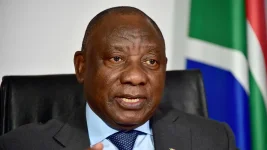
South African President Cyril Ramaphosa characterized the United States' decision to boycott the G20 Leaders Summit as a loss for Washington, asserting that the gathering in Johannesburg would proceed effectively without American participation. He stated that the United States was forfeiting its influential role as the world's largest economy and suggested that boycott tactics are generally ineffective. Ramaphosa confirmed that key decisions, including potential agreements on reducing debt costs for developing nations, would still be made.
The United States and Argentina, whose President Javier Milei is a staunch ally of US President Donald Trump, will not send their top leaders. Russian President Vladimir Putin will also be absent due to an International Criminal Court arrest warrant. Despite these notable absences, President Ramaphosa indicated that over 30 world leaders, including those from China, India, and Brazil, would attend the first G20 meeting on African soil.
Tensions between Pretoria and Washington have escalated, with the US administration criticizing South Africa's foreign policy positions and its G20 summit theme, "Solidarity, Equality, and Sustainability," which it labeled anti-American. South Africa intends to use its presidency to advance Global South priorities, focusing on climate resilience and international financial reform.
The United States and Argentina, whose President Javier Milei is a staunch ally of US President Donald Trump, will not send their top leaders. Russian President Vladimir Putin will also be absent due to an International Criminal Court arrest warrant. Despite these notable absences, President Ramaphosa indicated that over 30 world leaders, including those from China, India, and Brazil, would attend the first G20 meeting on African soil.
Tensions between Pretoria and Washington have escalated, with the US administration criticizing South Africa's foreign policy positions and its G20 summit theme, "Solidarity, Equality, and Sustainability," which it labeled anti-American. South Africa intends to use its presidency to advance Global South priorities, focusing on climate resilience and international financial reform.