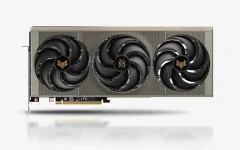
Sapphire’s NITRO+ RX 9070 XT uses two metal layers on the rear, with a removable magnetic cover sitting over the card’s fixed backplate. The removable piece is what Sapphire calls Quick Connect MagniPlate, so pulling it off does not leave the PCB naked or turn the card into an unfinished skeleton.
The design matters because Sapphire moved the 12V-2x6 power socket into a recessed area near the end of the card instead of putting it on the usual exposed edge. Six strong magnets hold MagniPlate over that area after the cable is connected, which is why the Valor Mortis magnetic backplate design can carry full artwork without changing the cooler underneath.
Sapphire also describes the secondary plate as part of the card’s heat-dissipation and durability setup, but there is an important distinction here. Sapphire makes those claims for the complete design, but it does not publish a temperature delta for running the card with MagniPlate fitted versus removed. Treat the cooling language as a design feature, not a promised temperature drop you can pencil into a build.
There is enough space to move the cable around under the cover, but installation order still matters. Connect and route the power lead before installing the graphics card if your case makes rear access awkward. Trying to do the fiddly part after a 330.8 mm triple-slot card is already locked into the PCIe slot just creates extra work for no real benefit.
The cover is not some thin refrigerator-magnet panel either. One measured review put the card at about 3.5 pounds without MagniPlate and 4 pounds 3 ounces with it fitted, a difference of roughly 11 ounces. Sapphire includes an L-shaped support bracket for the complete card, which is worth using because the finished assembly is a substantial lump of metal hanging from a motherboard slot.
The dual-layer setup also explains why themed NITRO+ cards are relatively easy for Sapphire to spin into new editions. Crimson Desert and Valor Mortis can receive different rear artwork and fan-hub graphics while leaving the underlying GPU, heatsink, PCB, clocks, and fixed backplate largely alone. Swapping visual identity does not require Sapphire to engineer a fresh cooler every time a game partnership appears.
There is a small maintenance advantage too. You can remove the outer cover without hunting for screws, which exposes the cable area quickly if you need to inspect routing, disconnect the power lead, or change the ARGB connection. Fan removal is a separate Quick Connect feature, so MagniPlate should not be confused with the replaceable-fan system even though both are built around easier access.
The included three-to-one PCIe adapter complicates things further because three 8-pin leads take more space than a native 12V-2x6 cable. Nothing stops the adapter from working as intended, but hiding several feeder cables behind the tray demands more planning than routing one native PSU lead. A tidy showroom-style result depends as much on the case and power supply as it does on MagniPlate itself.
None of this makes the plate pointless on a closed case. It still covers the recessed connection and forms part of the physical rear assembly. The visual payoff is simply much larger in a windowed build, especially on themed versions where the removable panel carries most of the artwork you actually paid extra attention to in the first place.
The design matters because Sapphire moved the 12V-2x6 power socket into a recessed area near the end of the card instead of putting it on the usual exposed edge. Six strong magnets hold MagniPlate over that area after the cable is connected, which is why the Valor Mortis magnetic backplate design can carry full artwork without changing the cooler underneath.
Sapphire also describes the secondary plate as part of the card’s heat-dissipation and durability setup, but there is an important distinction here. Sapphire makes those claims for the complete design, but it does not publish a temperature delta for running the card with MagniPlate fitted versus removed. Treat the cooling language as a design feature, not a promised temperature drop you can pencil into a build.
The hidden cable is the real trick
Take MagniPlate off and the strange part of the NITRO+ layout makes sense. The 16-pin socket sits down inside the rear opening, next to the ARGB connection, with room for the power lead to bend toward the motherboard tray instead of arching over the visible side of the graphics card. Open flanges in the metalwork let you choose a cable route before the magnetic cover goes back on.There is enough space to move the cable around under the cover, but installation order still matters. Connect and route the power lead before installing the graphics card if your case makes rear access awkward. Trying to do the fiddly part after a 330.8 mm triple-slot card is already locked into the PCIe slot just creates extra work for no real benefit.
The cover is not some thin refrigerator-magnet panel either. One measured review put the card at about 3.5 pounds without MagniPlate and 4 pounds 3 ounces with it fitted, a difference of roughly 11 ounces. Sapphire includes an L-shaped support bracket for the complete card, which is worth using because the finished assembly is a substantial lump of metal hanging from a motherboard slot.
The second plate has several jobs at once
MagniPlate cleans up the rear, covers the recessed wiring, adds another metal layer, and gives Sapphire an easy surface for limited-edition artwork. The older idea behind part of this design is not exotic. Graphics-card backplates have long served structural and thermal roles, although Sapphire’s removable magnetic outer layer is a much more appearance-conscious implementation.The dual-layer setup also explains why themed NITRO+ cards are relatively easy for Sapphire to spin into new editions. Crimson Desert and Valor Mortis can receive different rear artwork and fan-hub graphics while leaving the underlying GPU, heatsink, PCB, clocks, and fixed backplate largely alone. Swapping visual identity does not require Sapphire to engineer a fresh cooler every time a game partnership appears.
There is a small maintenance advantage too. You can remove the outer cover without hunting for screws, which exposes the cable area quickly if you need to inspect routing, disconnect the power lead, or change the ARGB connection. Fan removal is a separate Quick Connect feature, so MagniPlate should not be confused with the replaceable-fan system even though both are built around easier access.
Case layout decides whether the idea works well
A hidden cable only looks hidden if the case gives it somewhere sensible to go. Sapphire’s layout expects you to route the lead through the rear-side area and toward the motherboard tray, so cases with cramped grommets, thick cable bundles, or very little clearance behind the tray can turn the neat concept into a wrestling match.The included three-to-one PCIe adapter complicates things further because three 8-pin leads take more space than a native 12V-2x6 cable. Nothing stops the adapter from working as intended, but hiding several feeder cables behind the tray demands more planning than routing one native PSU lead. A tidy showroom-style result depends as much on the case and power supply as it does on MagniPlate itself.
None of this makes the plate pointless on a closed case. It still covers the recessed connection and forms part of the physical rear assembly. The visual payoff is simply much larger in a windowed build, especially on themed versions where the removable panel carries most of the artwork you actually paid extra attention to in the first place.