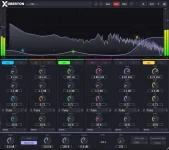
Nonlinear saturation reshapes a vocal waveform and creates new harmonics, so bright consonants can become more obvious as drive rises. The underlying behavior comes from nonlinear audio distortion circuits, where the transfer shape changes the waveform instead of simply scaling it.
A good vocal saturation plugin should make that trade easy to hear. The best vocal saturation plugin for a husky rap lead may be a bad fit for an airy singer because the useful part is not the label on the mode; it is how the processor reacts to the actual voice.
Using saturation on vocals works best when you decide what needs help first. A thin verse may need more body, a dense chorus may need extra edge, and a bright take may already have enough upper harmonic energy before you touch the drive control.
Lower the problem syllables before the saturator when they are obviously jumping out. Clip gain works because it changes what hits the nonlinear stage rather than trying to repair everything afterward. A gentle de-esser can do the same job dynamically when manual edits would be tedious.
Whether the de-esser sits before or after saturation depends on the problem. Put it before when the raw esses are driving the processor too hard. Put it after when the saturation itself creates the harsh edge. A light pass on both sides can work better than forcing one de-esser to do all the cleanup.
Multiband saturation on vocals gives you another route. You can drive the body or lower presence while leaving the top end closer to clean, which is useful when the singer needs density but not more hiss. Oberton's frequency-selective saturation controls are relevant here because the point is choosing which part of the vocal gets pushed.
Vocal saturation settings should therefore be judged in context, not copied from a screenshot. Input level matters because nonlinear processors react to level, and two takes can hit the same drive knob very differently. Trim the signal until the processor responds in a useful range before deciding the mode is wrong.
A tape saturation plugin for vocals can be useful, but the word tape does not guarantee softness. The same goes for a tube saturation plugin for vocals. Different models have different transfer curves, filtering, internal gain, and headroom, so character names are starting points rather than promises.
A saturation plugin for rap vocals often gets pushed harder because some performances benefit from a denser, more forward midrange. Keep the consonants under control first. Grit on the vowels can sound intentional while grit on every S can make the whole track feel brittle.
A free vocal saturation plugin can be enough for this job if it gives you predictable drive and easy output control. Fancy mode names do not matter much when the basic test fails. Bypass should not make the processed vocal collapse just because it was a decibel louder.
Level matching is the boring part that saves you from bad decisions. Saturation can raise apparent loudness while adding harmonics, and louder usually feels more exciting for a moment. Pull the output down until processed and bypassed versions sit at a similar level, then decide whether the tone actually improved.
The amount of saturation a vocal needs can change from phrase to phrase. A restrained verse may want barely any, while one pushed line in the chorus may take more drive without sounding forced. Automation is often cleaner than finding one compromise setting and leaving it there.
If the vocal stays readable, the harsh syllables remain controlled, and the added density survives a matched bypass test, the processor is earning its place. Once the top end starts shouting before the singer does, back the drive off or change which frequencies are being hit.
A good vocal saturation plugin should make that trade easy to hear. The best vocal saturation plugin for a husky rap lead may be a bad fit for an airy singer because the useful part is not the label on the mode; it is how the processor reacts to the actual voice.
Using saturation on vocals works best when you decide what needs help first. A thin verse may need more body, a dense chorus may need extra edge, and a bright take may already have enough upper harmonic energy before you touch the drive control.
Drive the vocal without driving the esses
Sibilance is usually where a nice setting turns ugly. Strong S, T, and SH sounds already carry plenty of high-frequency energy, so pushing them into a nonlinear stage can make those moments feel sharper than the vowels around them. Adding saturation to vocals without checking the consonants is one of the fastest ways to mistake extra bite for useful detail.Lower the problem syllables before the saturator when they are obviously jumping out. Clip gain works because it changes what hits the nonlinear stage rather than trying to repair everything afterward. A gentle de-esser can do the same job dynamically when manual edits would be tedious.
Whether the de-esser sits before or after saturation depends on the problem. Put it before when the raw esses are driving the processor too hard. Put it after when the saturation itself creates the harsh edge. A light pass on both sides can work better than forcing one de-esser to do all the cleanup.
Multiband saturation on vocals gives you another route. You can drive the body or lower presence while leaving the top end closer to clean, which is useful when the singer needs density but not more hiss. Oberton's frequency-selective saturation controls are relevant here because the point is choosing which part of the vocal gets pushed.
Signal order changes the sound more than the preset name
Where saturation sits in a vocal chain changes what reaches it. Place compression first and the saturator receives a more controlled level, but any consonants brought forward by compression also arrive more consistently. Put saturation earlier, and the compressor reacts to the harmonically altered signal instead.Vocal saturation settings should therefore be judged in context, not copied from a screenshot. Input level matters because nonlinear processors react to level, and two takes can hit the same drive knob very differently. Trim the signal until the processor responds in a useful range before deciding the mode is wrong.
A tape saturation plugin for vocals can be useful, but the word tape does not guarantee softness. The same goes for a tube saturation plugin for vocals. Different models have different transfer curves, filtering, internal gain, and headroom, so character names are starting points rather than promises.
A saturation plugin for rap vocals often gets pushed harder because some performances benefit from a denser, more forward midrange. Keep the consonants under control first. Grit on the vowels can sound intentional while grit on every S can make the whole track feel brittle.
Loudness matching exposes bad saturation fast
Parallel saturation on vocals is useful when the full effect sounds good but feels too obvious. Blend a driven copy underneath the clean vocal and you can keep the original articulation while adding density around it. Watch the low mids because parallel layers can build thickness faster than expected.A free vocal saturation plugin can be enough for this job if it gives you predictable drive and easy output control. Fancy mode names do not matter much when the basic test fails. Bypass should not make the processed vocal collapse just because it was a decibel louder.
Level matching is the boring part that saves you from bad decisions. Saturation can raise apparent loudness while adding harmonics, and louder usually feels more exciting for a moment. Pull the output down until processed and bypassed versions sit at a similar level, then decide whether the tone actually improved.
The amount of saturation a vocal needs can change from phrase to phrase. A restrained verse may want barely any, while one pushed line in the chorus may take more drive without sounding forced. Automation is often cleaner than finding one compromise setting and leaving it there.
If the vocal stays readable, the harsh syllables remain controlled, and the added density survives a matched bypass test, the processor is earning its place. Once the top end starts shouting before the singer does, back the drive off or change which frequencies are being hit.