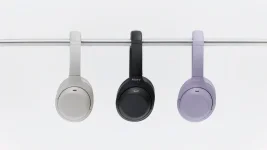
Sony’s current WH-1000XM4C help guide still describes its power cell as a built-in lithium-ion rechargeable battery, despite widespread launch claims of user replacement. The same guide tells you to consult a Sony dealer once runtime drops significantly, which is a surprisingly old-fashioned instruction for a headphone repeatedly framed around Europe’s coming battery rules. The contradiction matters.
The battery story sits inside Sony’s updated 2026 headphone range, where the XM4C arrives with 27 hours of rated playback with noise canceling enabled and 34 hours with it off. Those figures are lower than the original XM4’s 30 and 38 hours, but shorter runtime does not prove the battery was redesigned solely for legal compliance. Sony has not published an owner replacement procedure explaining the design change.
The legal definition is more specific than "replaceable." A portable battery generally must be removable with commercially available tools, without proprietary tools, heat, solvents, or specialized equipment unless such specialist tooling is supplied free. Instructions and safety information for removal and replacement also need to remain available online. This means a technically detachable battery hidden behind awkward adhesive or undocumented disassembly can still miss the spirit and potentially the legal threshold.
The regulation goes further than a one-time repair. Covered portable batteries must remain available as spare parts for at least five years after the final unit of the relevant equipment model is placed on the market, at a reasonable and non-discriminatory price. Software also cannot be used to block a compatible replacement. Those two details matter more for longevity than a launch-day claim saying the battery "can be replaced."
This does not establish that the XM4C will fail the 2027 rules. The requirements are not yet applicable, documentation can change before February, and units sold into Europe after the start date may ship with different instructions, parts availability, or service information. Calling the current manual proof of non-compliance would be premature. Calling the replacement story fully settled is premature too.
The legal picture is also less tidy than the headline version suggests. In July 2026, the European Commission adopted a delegated act adding narrow cases where certain products, including some wearable devices, may use batteries replaceable by independent professionals instead of end users when specific safety or enclosure conditions apply. A blanket claim that every rechargeable portable device must open the same way is therefore too broad.
Battery condition also depends on how the headphones spend their idle months. Sony specifically warns against leaving the XM4C unused for months without charging, while high temperatures and prolonged high states of charge can accelerate lithium-ion calendar aging across rechargeable cells. Keeping headphones in a hot car at full charge is consequently a different wear pattern from regular indoor use, even when both pairs log the same listening hours.
The practical issue in 2026 is documentation, not the existence of the regulation. You can buy an XM4C knowing the European rule is approaching and that the hardware has been publicly positioned around easier battery replacement, but Sony’s own support pages still route a degraded battery through dealer service today. Until Sony publishes the removal procedure, compatible pack details, and consumer pricing, "user-replaceable battery" describes an expected capability more clearly than a complete owner experience.
The battery story sits inside Sony’s updated 2026 headphone range, where the XM4C arrives with 27 hours of rated playback with noise canceling enabled and 34 hours with it off. Those figures are lower than the original XM4’s 30 and 38 hours, but shorter runtime does not prove the battery was redesigned solely for legal compliance. Sony has not published an owner replacement procedure explaining the design change.
The EU rule starts later than many headlines imply
Regulation EU 2023/1542 already exists, but its Article 11 removability and replaceability requirements apply from February 18, 2027. Products incorporating portable batteries that are placed on the EU market after the rule takes effect generally need batteries that an end user can remove and replace during the product’s lifetime. Existing stock placed on the market before that date is not pulled backward into the requirement.The legal definition is more specific than "replaceable." A portable battery generally must be removable with commercially available tools, without proprietary tools, heat, solvents, or specialized equipment unless such specialist tooling is supplied free. Instructions and safety information for removal and replacement also need to remain available online. This means a technically detachable battery hidden behind awkward adhesive or undocumented disassembly can still miss the spirit and potentially the legal threshold.
The regulation goes further than a one-time repair. Covered portable batteries must remain available as spare parts for at least five years after the final unit of the relevant equipment model is placed on the market, at a reasonable and non-discriminatory price. Software also cannot be used to block a compatible replacement. Those two details matter more for longevity than a launch-day claim saying the battery "can be replaced."
Sony’s documentation has not caught up with the headline
The current XM4C charging guide gives owners no battery-removal steps. It calls the cell built-in, recommends charging at least once every six months during long storage, and sends owners to a Sony dealer when usable hours fall sharply. No public user procedure appears in the guide at present, nor does Sony publish a consumer battery part number or retail replacement price there.This does not establish that the XM4C will fail the 2027 rules. The requirements are not yet applicable, documentation can change before February, and units sold into Europe after the start date may ship with different instructions, parts availability, or service information. Calling the current manual proof of non-compliance would be premature. Calling the replacement story fully settled is premature too.
The legal picture is also less tidy than the headline version suggests. In July 2026, the European Commission adopted a delegated act adding narrow cases where certain products, including some wearable devices, may use batteries replaceable by independent professionals instead of end users when specific safety or enclosure conditions apply. A blanket claim that every rechargeable portable device must open the same way is therefore too broad.
Battery longevity depends on more than replacement access
A replaceable battery only becomes useful when replacements remain obtainable, sensibly priced, and practical to install. The framework’s five-year spare-parts rule counts from the last unit of a covered model placed on the market, not simply five years from the day you bought your headphones. A model with a long sales life could therefore have parts support stretching well beyond its launch window.Battery condition also depends on how the headphones spend their idle months. Sony specifically warns against leaving the XM4C unused for months without charging, while high temperatures and prolonged high states of charge can accelerate lithium-ion calendar aging across rechargeable cells. Keeping headphones in a hot car at full charge is consequently a different wear pattern from regular indoor use, even when both pairs log the same listening hours.
The practical issue in 2026 is documentation, not the existence of the regulation. You can buy an XM4C knowing the European rule is approaching and that the hardware has been publicly positioned around easier battery replacement, but Sony’s own support pages still route a degraded battery through dealer service today. Until Sony publishes the removal procedure, compatible pack details, and consumer pricing, "user-replaceable battery" describes an expected capability more clearly than a complete owner experience.