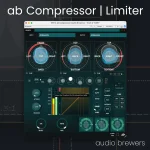
IEM’s DirectionalCompressor can use a masked Ambisonic region as the detector while applying gain reduction to a different spatial target. Its two compressor engines can each choose full, masked, or unmasked material as the driving signal and independently choose where the resulting gain is applied.
Ordinary sidechain compression separates what you hear from what the detector hears. A kick can make a bass track duck even though the kick never enters the bass output. Spatial sidechaining adds another decision because the trigger and the affected audio can each occupy different parts of a three-dimensional soundfield.
The useful work starts with this distinction. A loud event at the front does not always need to pull down ambience at the rear, and a rear effect does not need to move every time the front becomes busy. Directional control lets the compressor react to position as well as level.
The gain target is selected separately. A front singer can drive compression on the rest of the soundfield, which creates ducking without forcing the singer itself through the same gain reduction. Reverse the relationship, and the unmasked field can drive compression only inside the singer’s region.
This is direction-aware sidechain compression rather than ordinary bus ducking with a fancy panner. Threshold and timing still belong to the detector, but the gain envelope can land somewhere else. A gain-reduction meter therefore tells you how hard the detector is working, not necessarily which part of the soundfield is getting quieter.
The separation also creates failure modes that stereo sidechaining rarely exposes. If the spatial mask is too broad, unrelated sources can enter the detector and make the envelope twitch. If it is too narrow, a moving source can leave the mask and stop triggering the compressor even though its level has not changed.
Audio Brewers supports spatially selective compression from Ambisonics sidechains alongside mono and stereo sidechain inputs. The manufacturer also labels the feature as host-dependent, which matters because an immersive sidechain is only useful when the DAW can deliver the required auxiliary channels to the plug-in.
A spatial key can make the detector sensitive to where energy is arriving rather than merely how loud the key bus becomes overall. Keeping the key in Ambisonics also avoids decoding it to speakers first and then trying to infer its original direction from rendered output channels.
Practical ducking gets more selective as a result. A dialogue source in front can control a competing region without automatically lowering quiet material behind the listener, while an effects-heavy rear field can trigger treatment aimed elsewhere. The exact behavior depends on how the processor defines its detector region and gain target, so two spatial compressors can use the same sidechain signal very differently.
A host that offers only a mono or stereo auxiliary route cannot deliver a complete higher-order Ambisonics key through that path. The compressor may still react to the reduced key if the configuration is accepted, but full-sphere directional information is no longer reaching the detector.
Bus width is only half the check. Channel order and normalization also need to match what the spatial processor expects, because a correctly sized Ambisonics bus with misordered or differently normalized components can describe the wrong field to the detector.
Test the routing before setting attack or release. Keep the key level steady, use a deliberately narrow spatial mask, move its encoded direction through the scene, and watch whether the intended region changes the gain reduction while unrelated directions stay quiet. A detector that reacts identically everywhere is behaving like a level key, which is useful evidence that the spatial part of the sidechain path is not reaching the compressor as intended.
Ordinary sidechain compression separates what you hear from what the detector hears. A kick can make a bass track duck even though the kick never enters the bass output. Spatial sidechaining adds another decision because the trigger and the affected audio can each occupy different parts of a three-dimensional soundfield.
The useful work starts with this distinction. A loud event at the front does not always need to pull down ambience at the rear, and a rear effect does not need to move every time the front becomes busy. Directional control lets the compressor react to position as well as level.
A spatial mask separates the trigger from the target
A spatial mask defines the region the processor should treat as one area of the Ambisonic scene. In IEM’s implementation, azimuth, elevation, and width position that mask, while the detector can listen to the full field, the masked region, or everything outside it.The gain target is selected separately. A front singer can drive compression on the rest of the soundfield, which creates ducking without forcing the singer itself through the same gain reduction. Reverse the relationship, and the unmasked field can drive compression only inside the singer’s region.
This is direction-aware sidechain compression rather than ordinary bus ducking with a fancy panner. Threshold and timing still belong to the detector, but the gain envelope can land somewhere else. A gain-reduction meter therefore tells you how hard the detector is working, not necessarily which part of the soundfield is getting quieter.
The separation also creates failure modes that stereo sidechaining rarely exposes. If the spatial mask is too broad, unrelated sources can enter the detector and make the envelope twitch. If it is too narrow, a moving source can leave the mask and stop triggering the compressor even though its level has not changed.
Ambisonics sidechains carry more than level
A mono sidechain carries one changing amplitude value per sample, so it cannot encode a full three-dimensional Ambisonic direction by itself. Stereo adds left-right information, while an Ambisonics key carries spherical-harmonic components that describe the soundfield before decoding.Audio Brewers supports spatially selective compression from Ambisonics sidechains alongside mono and stereo sidechain inputs. The manufacturer also labels the feature as host-dependent, which matters because an immersive sidechain is only useful when the DAW can deliver the required auxiliary channels to the plug-in.
A spatial key can make the detector sensitive to where energy is arriving rather than merely how loud the key bus becomes overall. Keeping the key in Ambisonics also avoids decoding it to speakers first and then trying to infer its original direction from rendered output channels.
Practical ducking gets more selective as a result. A dialogue source in front can control a competing region without automatically lowering quiet material behind the listener, while an effects-heavy rear field can trigger treatment aimed elsewhere. The exact behavior depends on how the processor defines its detector region and gain target, so two spatial compressors can use the same sidechain signal very differently.
The DAW can become the bottleneck
VST3 treats a sidechain as an auxiliary audio input bus, and the plug-in declares the channel arrangement it can accept. The host still decides whether that bus is activated and what routing it exposes to the user. A sidechain button inside the plug-in cannot manufacture a multichannel path the host never provides.A host that offers only a mono or stereo auxiliary route cannot deliver a complete higher-order Ambisonics key through that path. The compressor may still react to the reduced key if the configuration is accepted, but full-sphere directional information is no longer reaching the detector.
Bus width is only half the check. Channel order and normalization also need to match what the spatial processor expects, because a correctly sized Ambisonics bus with misordered or differently normalized components can describe the wrong field to the detector.
Test the routing before setting attack or release. Keep the key level steady, use a deliberately narrow spatial mask, move its encoded direction through the scene, and watch whether the intended region changes the gain reduction while unrelated directions stay quiet. A detector that reacts identically everywhere is behaving like a level key, which is useful evidence that the spatial part of the sidechain path is not reaching the compressor as intended.