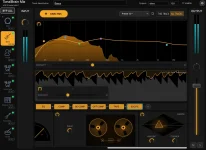
TonalBrain lets you save up to four section snapshots before it calculates one set of mix decisions for the song. A verse and chorus are the obvious pair, but the useful part is not the labels themselves. It is the change in arrangement, density, and dynamics between the moments you choose.
The section-aware TonalBrain mixing workflow does not create a separate mix for every snapshot. TonalBrain considers the captured sections together, then settles on EQ, compression, and stereo settings intended to survive across the arrangement. You are feeding it several views of the same song, not building automation scenes.
A weak selection wastes some of that context. Capturing two verses with nearly identical instrumentation tells the system less than pairing a stripped verse with a chorus where extra guitars, backing vocals, cymbals, or synth layers arrive. Four available slots do not mean four snapshots are always better.
Musical structure is often defined by changes in repetition, homogeneity, and novelty, which is why audio-based music structure analysis treats section boundaries as meaningful points rather than arbitrary chunks of time. You can apply the same practical thinking here without turning the session into a science project. Choose sections because something important changes in the sound.
Density is especially useful. Suppose the first verse has kick, bass, lead vocal, and one keyboard, while the chorus adds doubled guitars, backing vocals, open hats, and a wide pad. The chorus gives TonalBrain a different masking problem, so including it helps prevent settings that only behave well during the quieter verse.
A second chorus is worth a slot only when it changes enough to matter. Extra harmonies, a new counter-melody, heavier drums, or a lifted bass part can make chorus two meaningfully different from chorus one. A copy-pasted chorus with the same arrangement is mostly repeated evidence.
If the vocal needs two decibels more level only in the final chorus, ordinary automation is still the cleaner tool. The same applies when a synth should widen only during the hook or a guitar needs a deliberate tonal change for eight bars. TonalBrain can make a global decision with several sections in mind, but arrangement-specific moves remain arrangement-specific moves.
This distinction also affects what you capture. You do not need a snapshot for every structural label in the song merely because the labels exist. Intro, verse, pre-chorus, chorus, bridge, and outro can easily exceed the four-slot limit, so prioritize the sections that stress the mix in different ways.
Transient passages deserve caution. A fill, riser, breakdown transition, or one-bar dropout may be important musically but still make a poor representative snapshot if the surrounding section behaves differently. Capture the stable part of the arrangement you actually want the global settings to tolerate.
You can also use snapshots to expose trade-offs before accepting the generated settings. A compressor choice that feels perfect during the verse may clamp down too hard when the chorus thickens, while an EQ move that clears the chorus may leave the verse sounding unnecessarily thin. One global result has to negotiate both conditions.
Repeated analysis is still useful when you change the arrangement. Adding backing vocals, replacing the bass, or rebuilding the drums changes the evidence the previous snapshots represented. Recapturing the relevant sections after a substantial production change gives the system a current picture instead of asking an old analysis to describe a new mix.
The four-slot ceiling becomes less restrictive once you stop treating snapshots as chapter markers. Preserve the moments where masking, density, dynamics, or instrumentation genuinely shift. Near-duplicates consume space without showing TonalBrain a new problem to solve.
The section-aware TonalBrain mixing workflow does not create a separate mix for every snapshot. TonalBrain considers the captured sections together, then settles on EQ, compression, and stereo settings intended to survive across the arrangement. You are feeding it several views of the same song, not building automation scenes.
A weak selection wastes some of that context. Capturing two verses with nearly identical instrumentation tells the system less than pairing a stripped verse with a chorus where extra guitars, backing vocals, cymbals, or synth layers arrive. Four available slots do not mean four snapshots are always better.
Contrasting sections give the analysis more useful evidence
Pick moments where the mix changes jobs. A sparse verse may expose the vocal and bass clearly, while a packed chorus can reveal masking that never appears earlier. A bridge can matter when it introduces a new lead instrument, a different drum pattern, or a major shift in level and width.Musical structure is often defined by changes in repetition, homogeneity, and novelty, which is why audio-based music structure analysis treats section boundaries as meaningful points rather than arbitrary chunks of time. You can apply the same practical thinking here without turning the session into a science project. Choose sections because something important changes in the sound.
Density is especially useful. Suppose the first verse has kick, bass, lead vocal, and one keyboard, while the chorus adds doubled guitars, backing vocals, open hats, and a wide pad. The chorus gives TonalBrain a different masking problem, so including it helps prevent settings that only behave well during the quieter verse.
A second chorus is worth a slot only when it changes enough to matter. Extra harmonies, a new counter-melody, heavier drums, or a lifted bass part can make chorus two meaningfully different from chorus one. A copy-pasted chorus with the same arrangement is mostly repeated evidence.
Snapshots are not section-by-section automation
TonalBrain describes the result as one coherent mix informed by all captured sections. It does not say that snapshot one receives one EQ curve while snapshot two receives another, or that the plugin switches compressor settings when playback crosses a section boundary. Expecting that behavior can lead you to diagnose the wrong problem.If the vocal needs two decibels more level only in the final chorus, ordinary automation is still the cleaner tool. The same applies when a synth should widen only during the hook or a guitar needs a deliberate tonal change for eight bars. TonalBrain can make a global decision with several sections in mind, but arrangement-specific moves remain arrangement-specific moves.
This distinction also affects what you capture. You do not need a snapshot for every structural label in the song merely because the labels exist. Intro, verse, pre-chorus, chorus, bridge, and outro can easily exceed the four-slot limit, so prioritize the sections that stress the mix in different ways.
Transient passages deserve caution. A fill, riser, breakdown transition, or one-bar dropout may be important musically but still make a poor representative snapshot if the surrounding section behaves differently. Capture the stable part of the arrangement you actually want the global settings to tolerate.
Four slots reward selection rather than completeness
A practical four-snapshot set might include the sparsest verse, the densest chorus, a bridge with new instrumentation, and a final section with the largest dynamic or textural change. Another song may need only two. The point is coverage of meaningful mix states, not filling every available slot.You can also use snapshots to expose trade-offs before accepting the generated settings. A compressor choice that feels perfect during the verse may clamp down too hard when the chorus thickens, while an EQ move that clears the chorus may leave the verse sounding unnecessarily thin. One global result has to negotiate both conditions.
Repeated analysis is still useful when you change the arrangement. Adding backing vocals, replacing the bass, or rebuilding the drums changes the evidence the previous snapshots represented. Recapturing the relevant sections after a substantial production change gives the system a current picture instead of asking an old analysis to describe a new mix.
The four-slot ceiling becomes less restrictive once you stop treating snapshots as chapter markers. Preserve the moments where masking, density, dynamics, or instrumentation genuinely shift. Near-duplicates consume space without showing TonalBrain a new problem to solve.