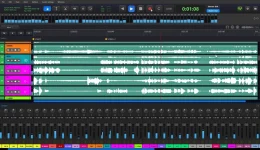
Waves Tracks Live 2.0 requires 16 GB of RAM and an SSD on both supported Mac and Windows systems. Waves lists Intel or ARM processors on Mac, while Windows calls for an Intel i5 or better.
The supported operating systems are macOS Sonoma 14, Sequoia 15, and Tahoe 26, plus Windows 10 and Windows 11. The Waves Tracks Live 2.0 requirements also allow Core Audio on Mac and ASIO on Windows, with sample rates from 44 kHz through 96 kHz and up to 128 mono recording channels.
Those numbers are a useful floor, not a promise that every interface, driver, or 128-channel rig will behave the same. A sensible Waves Tracks Live setup needs the computer, operating system, storage, audio driver, and connected hardware to agree before a show starts.
Waves Tracks Live on macOS Sequoia 15 is supported, as is Sonoma 14 and Tahoe 26. If you are still on Ventura 13, the current Tracks Live section does not list it. A Waves Tracks Live Sonoma machine is therefore sitting at the oldest macOS version Waves currently names for 2.0.
Storage deserves more attention than the short spec sheet gives it. Waves says SSD only, but the Tracks Live section does not publish a fixed amount of free space you must reserve for recordings. Do not quietly borrow the 30 GB figure shown elsewhere on Waves' page for plugins and assume it is a Tracks Live recording-space recommendation.
The recording drive has to absorb sustained multichannel audio, and higher sample rates increase the amount of audio data written over time. Waves supports recording from 44 kHz through 96 kHz, so a long 96 kHz show with a large input count naturally needs more storage headroom than a smaller 48 kHz job.
Core Audio handles the Mac side of the I/O connection. The audio interface and driver path matter because the recorder still depends on the hardware endpoint, conversion, driver layer, and routing around it. A successful Waves Tracks Live download on Mac does not prove the entire capture chain is ready.
Windows on ARM deserves particular caution because desktop applications and hardware drivers have separate compatibility rules. The Windows on ARM compatibility problem is especially relevant to audio interfaces, since an application may launch while the driver required by the interface still has no native ARM build.
ASIO is the supported Windows driver route. Driver quality and buffer settings can still affect stability and monitoring delay after the PC clears the minimum hardware check, which is why buffer size and driver stability belong in the pre-show test rather than being treated as unrelated DAW trivia.
Monitoring delay matters to performers even when recording itself is working. Delayed auditory feedback experiments found that added feedback delay can disrupt musical timing, so minimum computer specs should not be confused with a guarantee of comfortable software monitoring.
A Waves Tracks Live Behringer X32 setup is also different from the LV1 path. Tracks Live can work with non-Waves hardware through ASIO or Core Audio, so those rigs depend on the connected console or interface presenting a compatible audio driver rather than on LV1 synchronization.
Those conditions are what enable the tighter Tracks Live 2.0 LV1 integration, including channel-data synchronization and scene handling. They are not extra requirements for somebody using Tracks Live as a straightforward Core Audio or ASIO recorder.
The practical compatibility test is therefore bigger than opening the app once. Confirm the exact operating system, connect the real interface or console, select the intended driver, set the show sample rate, arm the expected channel count, and record long enough to expose dropouts or storage problems before the venue is full.
The supported operating systems are macOS Sonoma 14, Sequoia 15, and Tahoe 26, plus Windows 10 and Windows 11. The Waves Tracks Live 2.0 requirements also allow Core Audio on Mac and ASIO on Windows, with sample rates from 44 kHz through 96 kHz and up to 128 mono recording channels.
Those numbers are a useful floor, not a promise that every interface, driver, or 128-channel rig will behave the same. A sensible Waves Tracks Live setup needs the computer, operating system, storage, audio driver, and connected hardware to agree before a show starts.
Mac compatibility covers Intel and Apple Silicon
Waves Tracks Live on Mac officially supports both Intel and ARM processors. Tracks Live on an M1 Mac therefore falls inside the current ARM support language, and the same applies to later Apple Silicon machines without needing the old Intel-only assumptions around the original app.Waves Tracks Live on macOS Sequoia 15 is supported, as is Sonoma 14 and Tahoe 26. If you are still on Ventura 13, the current Tracks Live section does not list it. A Waves Tracks Live Sonoma machine is therefore sitting at the oldest macOS version Waves currently names for 2.0.
Storage deserves more attention than the short spec sheet gives it. Waves says SSD only, but the Tracks Live section does not publish a fixed amount of free space you must reserve for recordings. Do not quietly borrow the 30 GB figure shown elsewhere on Waves' page for plugins and assume it is a Tracks Live recording-space recommendation.
The recording drive has to absorb sustained multichannel audio, and higher sample rates increase the amount of audio data written over time. Waves supports recording from 44 kHz through 96 kHz, so a long 96 kHz show with a large input count naturally needs more storage headroom than a smaller 48 kHz job.
Core Audio handles the Mac side of the I/O connection. The audio interface and driver path matter because the recorder still depends on the hardware endpoint, conversion, driver layer, and routing around it. A successful Waves Tracks Live download on Mac does not prove the entire capture chain is ready.
Windows support depends heavily on the driver
Waves Tracks Live on Windows 11 requires an Intel i5 or higher, 16 GB of RAM, and SSD storage. Waves Tracks Live on Windows 10 has the same listed hardware requirements, while the current Tracks Live section does not name AMD or Windows on ARM processors as supported alternatives.Windows on ARM deserves particular caution because desktop applications and hardware drivers have separate compatibility rules. The Windows on ARM compatibility problem is especially relevant to audio interfaces, since an application may launch while the driver required by the interface still has no native ARM build.
ASIO is the supported Windows driver route. Driver quality and buffer settings can still affect stability and monitoring delay after the PC clears the minimum hardware check, which is why buffer size and driver stability belong in the pre-show test rather than being treated as unrelated DAW trivia.
Monitoring delay matters to performers even when recording itself is working. Delayed auditory feedback experiments found that added feedback delay can disrupt musical timing, so minimum computer specs should not be confused with a guarantee of comfortable software monitoring.
A Waves Tracks Live Behringer X32 setup is also different from the LV1 path. Tracks Live can work with non-Waves hardware through ASIO or Core Audio, so those rigs depend on the connected console or interface presenting a compatible audio driver rather than on LV1 synchronization.
LV1 integration adds separate requirements
The deeper LV1 workflow has its own checklist on top of the normal computer requirements. Tracks Live must run on a separate computer from LV1, eMotion LV1 must be version 17 or later, MyRemote Control Panel must be assigned in the Controls section of LV1's Inventory page, and the SoundGrid Driver on the Tracks Live computer must be assigned and patched in LV1.Those conditions are what enable the tighter Tracks Live 2.0 LV1 integration, including channel-data synchronization and scene handling. They are not extra requirements for somebody using Tracks Live as a straightforward Core Audio or ASIO recorder.
The practical compatibility test is therefore bigger than opening the app once. Confirm the exact operating system, connect the real interface or console, select the intended driver, set the show sample rate, arm the expected channel count, and record long enough to expose dropouts or storage problems before the venue is full.