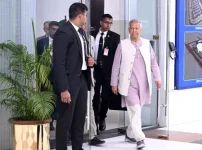
On Wednesday, Bangladesh’s ruling Awami League party criticized the economic situation under the Muhammad Yunus-led interim government, stating that the country is experiencing one of its toughest economic periods in recent history. The party emphasized that the economy is paralyzed, with rising unemployment, high inflation, and wages failing to keep pace with the cost of living, leaving citizens desperate.
The Awami League pointed out that millions of educated youth are unable to find jobs suited to their skills, while industries operate at half capacity and thousands of workers have been sent home. Frustration is visible across factories and markets, the party stated, highlighting the failure of Yunus’s leadership to stabilize the economy and maintain investor confidence.
The party criticized Yunus for not understanding the urgency of economic recovery, calling the current period one of "economic stagnation, uncertainty, and lost potential." It also pointed to inflation, which stood at 8.36% in September 2025, continuing to erode citizens' purchasing power despite claims of stability from the government.
Awami League leaders also stressed that women and low-income households are the hardest hit, facing rising job insecurity, higher costs, and inadequate social protections. They stated that policy failures, weak governance, and systemic corruption have exacerbated the situation, forcing families to cut back on essentials such as food, healthcare, and education.
The party accused Yunus of leaving a fragile economy behind, favoring policies that benefit politically connected elites at the expense of the majority of citizens. According to the Awami League, ordinary people are bearing the brunt of decisions that have failed to promote long-term economic stability and growth.
The Awami League pointed out that millions of educated youth are unable to find jobs suited to their skills, while industries operate at half capacity and thousands of workers have been sent home. Frustration is visible across factories and markets, the party stated, highlighting the failure of Yunus’s leadership to stabilize the economy and maintain investor confidence.
The party criticized Yunus for not understanding the urgency of economic recovery, calling the current period one of "economic stagnation, uncertainty, and lost potential." It also pointed to inflation, which stood at 8.36% in September 2025, continuing to erode citizens' purchasing power despite claims of stability from the government.
Awami League leaders also stressed that women and low-income households are the hardest hit, facing rising job insecurity, higher costs, and inadequate social protections. They stated that policy failures, weak governance, and systemic corruption have exacerbated the situation, forcing families to cut back on essentials such as food, healthcare, and education.
The party accused Yunus of leaving a fragile economy behind, favoring policies that benefit politically connected elites at the expense of the majority of citizens. According to the Awami League, ordinary people are bearing the brunt of decisions that have failed to promote long-term economic stability and growth.