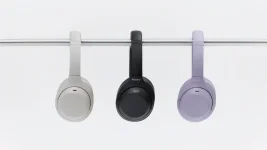
Sony lists Bluetooth 6.0 on the WH-1000XM4C, but its own codec specification names only SBC, AAC, and LDAC for wireless music playback. You still get multipoint, Fast Pair, LDAC, and the familiar A2DP route for music, yet the newer Bluetooth number does not quietly unlock LC3 or Auracast. The distinction is easy to miss. No hidden upgrade appears.
The XM4C arrives inside Sony’s new wireless headphone range beside two cheaper models that make the omission unusually obvious. Both the WH-CH730N and WH-CH530 support LC3 through LE Audio, while Sony’s premium-looking XM4C refresh stays with the older codec set. Price and Bluetooth version are doing different jobs here.
LE Audio actually depends on a collection of audio-specific features and profiles, with LC3 serving as its mandatory codec. The minimum Core feature needed for LE Audio arrived back with Bluetooth 5.2, so a product does not need Bluetooth 6.0 merely to support it. Conversely, moving to 6.0 does not force a manufacturer to implement the LE Audio stack.
The codec matters because Classic Audio and LE Audio move sound through different paths. XM4C music playback remains tied to A2DP with SBC, AAC, or LDAC, while Sony documents LC3 specifically for LE Audio on the WH-CH730N. The engineering behind LC3’s low-latency codec design targets lower complexity and shorter delay without turning every newer Bluetooth radio into an LC3 device.
The WH-CH730N can switch from Classic Audio to LE Audio through Sony Sound Connect when paired with a compatible Android phone. Sony’s setup process may require changing the connection priority, deleting the existing pairing, pairing the headphones again, and confirming that LE Audio is enabled on the phone. This is a real operating mode, not a codec name sitting unused on a specification page.
Auracast adds another layer. Sony documents Auracast broadcast listening on the WH-CH730N, provided the connected source also supports Auracast, while the XM4C documentation contains no equivalent receiving mode. Bluetooth 6.0 therefore gives you no shortcut around the missing implementation.
Sony’s choices also explain why LDAC support should not be treated as evidence for LE Audio. LDAC remains a Sony-developed high-data-rate option for Classic Audio on the XM4C, whereas LC3 belongs to the LE Audio path. One headphone can support LDAC without LC3, and another can support LC3 without LDAC.
Compatibility has two ends as well. A headset with LE Audio still needs a phone, computer, television, or transmitter that supports the required mode, and Auracast needs compatible broadcasting hardware before anything can be received. Buying a headphone with LC3 does not retrofit those capabilities into an older source.
Sony’s own setup instructions expose another trade-off because some headset functions may be unavailable while the WH-CH730N is connected through LE Audio. Switching modes is therefore a choice between connection behaviors, not an automatic upgrade path where every feature remains active. Classic Audio is still useful, even on hardware capable of more.
For the XM4C, the clean reading is simple. Bluetooth 6.0 modernizes the radio specification, while Sony keeps music playback on SBC, AAC, and LDAC instead of adding LC3, LE Audio, or Auracast. If one of those three features matters to your setup, the Bluetooth number on the box is not enough information to make the call.
The XM4C arrives inside Sony’s new wireless headphone range beside two cheaper models that make the omission unusually obvious. Both the WH-CH730N and WH-CH530 support LC3 through LE Audio, while Sony’s premium-looking XM4C refresh stays with the older codec set. Price and Bluetooth version are doing different jobs here.
Bluetooth version numbers do not define the audio stack
A Bluetooth Core version tells you which generation of the underlying specification a product has qualified against. It does not mean every optional application built around that generation is present, and Bluetooth SIG separates claims such as LE Audio and Auracast from the Core version itself. A headset can therefore say Bluetooth 6.0 without promising LE Audio.LE Audio actually depends on a collection of audio-specific features and profiles, with LC3 serving as its mandatory codec. The minimum Core feature needed for LE Audio arrived back with Bluetooth 5.2, so a product does not need Bluetooth 6.0 merely to support it. Conversely, moving to 6.0 does not force a manufacturer to implement the LE Audio stack.
The codec matters because Classic Audio and LE Audio move sound through different paths. XM4C music playback remains tied to A2DP with SBC, AAC, or LDAC, while Sony documents LC3 specifically for LE Audio on the WH-CH730N. The engineering behind LC3’s low-latency codec design targets lower complexity and shorter delay without turning every newer Bluetooth radio into an LC3 device.
Sony split its 2026 range in an unexpected way
The strange part is not simply that the XM4C lacks LC3. Sony launched it alongside the WH-CH730N and WH-CH530, two less expensive headphones that do support LC3 and LE Audio, so the newer feature set is not being reserved for the highest-priced model. The product families are following different design priorities.The WH-CH730N can switch from Classic Audio to LE Audio through Sony Sound Connect when paired with a compatible Android phone. Sony’s setup process may require changing the connection priority, deleting the existing pairing, pairing the headphones again, and confirming that LE Audio is enabled on the phone. This is a real operating mode, not a codec name sitting unused on a specification page.
Auracast adds another layer. Sony documents Auracast broadcast listening on the WH-CH730N, provided the connected source also supports Auracast, while the XM4C documentation contains no equivalent receiving mode. Bluetooth 6.0 therefore gives you no shortcut around the missing implementation.
Sony’s choices also explain why LDAC support should not be treated as evidence for LE Audio. LDAC remains a Sony-developed high-data-rate option for Classic Audio on the XM4C, whereas LC3 belongs to the LE Audio path. One headphone can support LDAC without LC3, and another can support LC3 without LDAC.
LE Audio changes compatibility more than the badge suggests
The practical difference depends on what you connect. An XM4C paired with a phone that already handles LDAC can still deliver Sony’s higher-bandwidth Classic Audio option, so losing LC3 is not automatically a downgrade in every listening situation. LE Audio becomes more relevant when low latency, Auracast reception, or future device interoperability matters to you.Compatibility has two ends as well. A headset with LE Audio still needs a phone, computer, television, or transmitter that supports the required mode, and Auracast needs compatible broadcasting hardware before anything can be received. Buying a headphone with LC3 does not retrofit those capabilities into an older source.
Sony’s own setup instructions expose another trade-off because some headset functions may be unavailable while the WH-CH730N is connected through LE Audio. Switching modes is therefore a choice between connection behaviors, not an automatic upgrade path where every feature remains active. Classic Audio is still useful, even on hardware capable of more.
For the XM4C, the clean reading is simple. Bluetooth 6.0 modernizes the radio specification, while Sony keeps music playback on SBC, AAC, and LDAC instead of adding LC3, LE Audio, or Auracast. If one of those three features matters to your setup, the Bluetooth number on the box is not enough information to make the call.