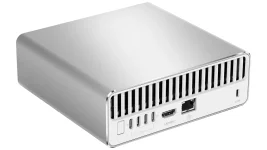
MSI ships EdgeMesa N AI+ as a Windows machine, while NVIDIA’s DGX Spark runs DGX OS on a closely related Grace Blackwell platform. On paper, both machines land in the same unusual class of 20 Arm CPU cores, Blackwell graphics, 128GB unified memory, and roughly one petaFLOP of FP4 AI compute.
The resemblance gets less useful once you start using them. The MSI EdgeMesa N AI+ hardware is built around RTX Spark N1X and Windows, while DGX Spark uses the GB10 Grace Blackwell Superchip with NVIDIA’s Linux-based DGX environment already arranged around AI development.
So this is not really Windows versus Linux in the abstract. You are choosing where the boring setup work happens, which tools feel native, and whether the box needs to behave like a normal desktop when the AI job is finished.
The surrounding tool list is becoming practical rather than theoretical. NVIDIA currently points developers toward Windows on Arm versions or paths for Ollama, llama.cpp, TensorRT for RTX, PyTorch, Nsight tools, and CUDA itself. You can build a local model workflow without first turning the PC into a little Linux server.
Compatibility still deserves attention. Native Arm64 software is the clean route, while existing x64 applications may depend on emulation, packages, drivers, extensions, or compiled dependencies that were written with ordinary x86 Windows in mind. A Python project can look simple right up until one binary wheel in the dependency tree has no suitable Arm build.
EdgeMesa therefore makes more sense as a mixed-use development machine. Windows applications, creator software, browsers, office tools, local AI front ends, and CUDA work can share one desktop environment without a remote session or second computer sitting beside it. Convenience is part of the product, not a side effect.
A developer who already lives in containers may prefer that arrangement. Instead of checking whether every Windows package has a native Arm build, you are working inside a Linux stack designed around CUDA, containerized models, NIM packages, notebooks, and remote development from the start.
The difference matters more with messy projects than clean demos. AI applications often pull together Python packages, compiled CUDA code, model servers, databases, web interfaces, and assorted command-line tools. A lot of that infrastructure is still developed and deployed on Linux, while RTX Spark on Windows is still going through the very public process of bringing more software across.
Raw hardware similarity does not erase software overhead either. Large-model inference can become limited by memory movement rather than headline compute, a point explored in memory-bound LLM inference behavior. Software versions, kernels, runtimes, memory handling, and model backends can therefore move real performance even when two systems look suspiciously similar on a spec sheet.
MSI currently lists 10G LAN, Wi-Fi 7, four 20Gbps USB-C ports, and HDMI for EdgeMesa. Those are strong desktop connections, but they do not amount to the same scale-out fabric. Buying two EdgeMesa boxes therefore should not be treated as the Windows equivalent of buying two DGX Sparks and wiring them together through ConnectX.
Published performance figures need the same restraint. NVIDIA specifies 273GB/s memory bandwidth for DGX Spark, while MSI’s public EdgeMesa material lists the 128GB capacity without giving an equivalent memory-bandwidth figure. Matching memory capacity and a similar core count do not prove matching model throughput.
The gap becomes important when a workload outgrows one machine. DGX Spark was designed with multi-system AI work in view, and NVIDIA documents paired configurations through its high-speed networking path. EdgeMesa currently presents itself as a powerful standalone Windows AI desktop with 10GbE, so distributing one model across multiple boxes would face a very different interconnect ceiling.
The resemblance gets less useful once you start using them. The MSI EdgeMesa N AI+ hardware is built around RTX Spark N1X and Windows, while DGX Spark uses the GB10 Grace Blackwell Superchip with NVIDIA’s Linux-based DGX environment already arranged around AI development.
So this is not really Windows versus Linux in the abstract. You are choosing where the boring setup work happens, which tools feel native, and whether the box needs to behave like a normal desktop when the AI job is finished.
Windows changes the daily development workflow
RTX Spark matters because NVIDIA now has a proper Windows on Arm CUDA path instead of expecting developers to treat Windows on Arm as an unsupported side project. CUDA 13.4 supports Windows on Arm, and NVIDIA provides native Arm64 development guidance alongside x64 cross-compilation for people moving existing CUDA applications over.The surrounding tool list is becoming practical rather than theoretical. NVIDIA currently points developers toward Windows on Arm versions or paths for Ollama, llama.cpp, TensorRT for RTX, PyTorch, Nsight tools, and CUDA itself. You can build a local model workflow without first turning the PC into a little Linux server.
Compatibility still deserves attention. Native Arm64 software is the clean route, while existing x64 applications may depend on emulation, packages, drivers, extensions, or compiled dependencies that were written with ordinary x86 Windows in mind. A Python project can look simple right up until one binary wheel in the dependency tree has no suitable Arm build.
EdgeMesa therefore makes more sense as a mixed-use development machine. Windows applications, creator software, browsers, office tools, local AI front ends, and CUDA work can share one desktop environment without a remote session or second computer sitting beside it. Convenience is part of the product, not a side effect.
DGX Spark arrives with more of the AI stack ready
DGX Spark starts from the opposite direction. DGX OS is an Ubuntu-based NVIDIA environment built specifically for AI workloads, with NVIDIA drivers, CUDA components, Docker support, NVIDIA Container Runtime, NGC integration, an integrated JupyterLab path, and NVIDIA’s own management tooling already sitting in the ecosystem.A developer who already lives in containers may prefer that arrangement. Instead of checking whether every Windows package has a native Arm build, you are working inside a Linux stack designed around CUDA, containerized models, NIM packages, notebooks, and remote development from the start.
The difference matters more with messy projects than clean demos. AI applications often pull together Python packages, compiled CUDA code, model servers, databases, web interfaces, and assorted command-line tools. A lot of that infrastructure is still developed and deployed on Linux, while RTX Spark on Windows is still going through the very public process of bringing more software across.
Raw hardware similarity does not erase software overhead either. Large-model inference can become limited by memory movement rather than headline compute, a point explored in memory-bound LLM inference behavior. Software versions, kernels, runtimes, memory handling, and model backends can therefore move real performance even when two systems look suspiciously similar on a spec sheet.
Networking creates the bigger hardware divide
DGX Spark also has one piece of hardware EdgeMesa does not currently list. Alongside ordinary 10Gb Ethernet, NVIDIA includes a ConnectX-7 interface rated at 200Gbps, giving DGX Spark a much faster dedicated path for linking systems and moving AI data between nodes.MSI currently lists 10G LAN, Wi-Fi 7, four 20Gbps USB-C ports, and HDMI for EdgeMesa. Those are strong desktop connections, but they do not amount to the same scale-out fabric. Buying two EdgeMesa boxes therefore should not be treated as the Windows equivalent of buying two DGX Sparks and wiring them together through ConnectX.
Published performance figures need the same restraint. NVIDIA specifies 273GB/s memory bandwidth for DGX Spark, while MSI’s public EdgeMesa material lists the 128GB capacity without giving an equivalent memory-bandwidth figure. Matching memory capacity and a similar core count do not prove matching model throughput.
The gap becomes important when a workload outgrows one machine. DGX Spark was designed with multi-system AI work in view, and NVIDIA documents paired configurations through its high-speed networking path. EdgeMesa currently presents itself as a powerful standalone Windows AI desktop with 10GbE, so distributing one model across multiple boxes would face a very different interconnect ceiling.