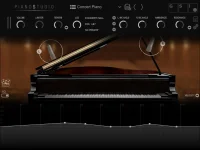
GSi Piano Studio exposes string dampening, detuning, sympathetic resonance, duplex-scale influence, and hammer hardness as adjustable parts of its modeled grand piano. Those controls matter because they alter the behavior being synthesized, not just an effect placed after the sound.
Treat them like separate jobs. Record one short MIDI passage with soft notes, hard accents, repeated notes, sustained intervals, and a few pedal-down chords, then reuse it for every adjustment. Leave microphones, preamps, EQ, ambience, delay, reverb, limiter settings, and output level alone while you listen.
Version 1.1.0 also changed Piano Studio's revised physical model, including attack transients, tails, and dynamic response. A preset made before the update may therefore deserve a fresh listen before you start redesigning it around old assumptions. Begin from a sound you already understand.
Play the same note softly, moderately, and hard, then repeat the test in the bass, middle, and treble. Listen to the front edge of the note, the amount of upper-frequency energy, and whether hard accents become convincingly firmer or merely brittle. Avoid compensating with EQ while you do this.
Small moves can matter. Research on parameter fitting in physical piano models found that relatively slight parameter changes could improve preservation of attack and brightness, which is a useful warning against sweeping a modeling control from minimum to maximum and calling the loudest difference more realistic. Find the range where touch still changes naturally before chasing a dramatic tone.
Once hammer character feels believable, save a reference program. You need a fixed starting point because later changes to damping, detuning, and resonance can make the attack seem different even when the hammer setting has not moved. Your ears compare whole notes, not labeled controls.
Do not confuse a longer tail with a better piano. Excess sustain can smear harmony, especially under pedal, while too much damping can make exposed notes collapse before the phrase has finished breathing. The useful setting depends on how the instrument behaves through time, not how luxurious one chord sounds for three seconds.
Detuning needs a different test because pitch spread can change the sense of width, motion, and beating without fixing a weak decay. Use held octaves, fifths, and plain triads, then listen again in mono if your monitoring setup allows it. Push the control far enough to learn its character, then return toward the center until the movement stops drawing attention to itself.
Avoid tuning several modeling parameters at once. If you increase detuning, extend the decay, and add resonance in the same pass, a lush result tells you almost nothing about which change helped. One variable at a time is slower for five minutes and faster for the next five hours.
The duplex-scale related control deserves similar restraint. GSi exposes its influence as part of the model, so audition it with bright upper-register material and long decays where small high-frequency changes have space to remain audible. Do not assume a higher setting represents a more expensive or more realistic piano.
Finish by returning to the complete passage you recorded at the start. A convincing setup should keep soft notes distinct, hard notes controlled, sustained harmony alive, and repeated notes clear without one modeled behavior announcing itself on every phrase. If you can identify the resonance, detuning, or hammer setting before you notice the performance, back it down.
Treat them like separate jobs. Record one short MIDI passage with soft notes, hard accents, repeated notes, sustained intervals, and a few pedal-down chords, then reuse it for every adjustment. Leave microphones, preamps, EQ, ambience, delay, reverb, limiter settings, and output level alone while you listen.
Version 1.1.0 also changed Piano Studio's revised physical model, including attack transients, tails, and dynamic response. A preset made before the update may therefore deserve a fresh listen before you start redesigning it around old assumptions. Begin from a sound you already understand.
Hammer hardness should be judged at several velocities
Hammer hardness belongs near the start of the process because the hammer is part of the excitation itself. On a real piano, felt compression and hammer-string contact affect which parts of the string spectrum are excited, and stronger strikes do not behave like simple volume boosts. A useful virtual control should therefore be judged across playing strength, not on one middle-velocity note.Play the same note softly, moderately, and hard, then repeat the test in the bass, middle, and treble. Listen to the front edge of the note, the amount of upper-frequency energy, and whether hard accents become convincingly firmer or merely brittle. Avoid compensating with EQ while you do this.
Small moves can matter. Research on parameter fitting in physical piano models found that relatively slight parameter changes could improve preservation of attack and brightness, which is a useful warning against sweeping a modeling control from minimum to maximum and calling the loudest difference more realistic. Find the range where touch still changes naturally before chasing a dramatic tone.
Once hammer character feels believable, save a reference program. You need a fixed starting point because later changes to damping, detuning, and resonance can make the attack seem different even when the hammer setting has not moved. Your ears compare whole notes, not labeled controls.
Damping and detuning change different parts of the note
String damping is mainly worth judging after the attack. Hold single notes long enough to hear their tails, then compare slow chords and repeated notes at matched levels. You are listening for how quickly energy disappears and whether the decay feels stable across registers.Do not confuse a longer tail with a better piano. Excess sustain can smear harmony, especially under pedal, while too much damping can make exposed notes collapse before the phrase has finished breathing. The useful setting depends on how the instrument behaves through time, not how luxurious one chord sounds for three seconds.
Detuning needs a different test because pitch spread can change the sense of width, motion, and beating without fixing a weak decay. Use held octaves, fifths, and plain triads, then listen again in mono if your monitoring setup allows it. Push the control far enough to learn its character, then return toward the center until the movement stops drawing attention to itself.
Avoid tuning several modeling parameters at once. If you increase detuning, extend the decay, and add resonance in the same pass, a lush result tells you almost nothing about which change helped. One variable at a time is slower for five minutes and faster for the next five hours.
Sympathetic resonance should survive exposed playing
Sympathetic resonance becomes easiest to judge when the arrangement gets out of the way. Hold selected notes or chords, use the sustain pedal in controlled passages, and compare how unstruck strings appear to contribute around the notes you actually played. Keep external reverb low because a wash of room sound can imitate the impression of extra resonance without behaving the same way.The duplex-scale related control deserves similar restraint. GSi exposes its influence as part of the model, so audition it with bright upper-register material and long decays where small high-frequency changes have space to remain audible. Do not assume a higher setting represents a more expensive or more realistic piano.
Finish by returning to the complete passage you recorded at the start. A convincing setup should keep soft notes distinct, hard notes controlled, sustained harmony alive, and repeated notes clear without one modeled behavior announcing itself on every phrase. If you can identify the resonance, detuning, or hammer setting before you notice the performance, back it down.