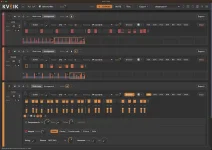
KVEIK 1.2.0 changed MIDI import so off-grid note starts become micro-shift values, while note lengths, velocities, and pitches remain usable inside the sequencer. Instead of turning a played phrase into a tidier but different pattern, the import process keeps the timing information that existed in the file.
KVEIK also detects the incoming grid and pattern length before mapping the performance into its step system. A recorded phrase can enter KVEIK's expanded melodic MIDI workflow without slightly early or late attacks being flattened onto visible steps.
A note played a little ahead of the grid can stay ahead, while a late note can keep its delay. You can then change either one directly. No reopening the source MIDI in another editor, no guessing where it sat, and no full-pass quantizing just to fix a few rough attacks.
Since KVEIK detects the grid and length during import, the result still behaves like a KVEIK pattern rather than a detached MIDI clip. You can work on timing inside the same lane system used for hand-drawn steps, with the original deviations still available for judgment.
Real playing mixes intention with error. A drummer might consistently lean a hi-hat behind the beat while landing one accidental hit much too late. A keyboard player might push a pickup while missing another onset. KVEIK does not pretend to know which deviation was musical.
Human timing is not automatically better timing. A controlled microtiming study found similarly high groove ratings for fully quantized material and the performers' original timing, while exaggerated timing deviations reduced ratings. Preserving offsets is valuable because it keeps your options open, not because every off-grid note automatically sounds better. Here, preservation buys you reversibility. You can tighten a phrase later without first throwing away what the player actually did.
You notice the difference immediately on bass lines, keys, pads, and anything with sustained articulation. A held note can remain held across several steps, so shortening its start-time error does not force you to rebuild its release point afterward. The start and the duration stay separate editing decisions.
KVEIK can also store imported pitches relative to the track note. Combined with retained velocities, this gives the imported phrase more structure than a row of anonymous triggers. Pitch movement, dynamics, duration, and timing all remain available to the sequencer's own lanes after the file has crossed over.
You are not forced to choose between the original take and a regenerated pattern. Record with a controller, bring the MIDI into KVEIK, and work only on the dimensions that need attention. Timing can change while pitch, velocity, or duration stays intact.
Suppose most notes sit only slightly around the beat, but two attacks land much farther away. Shift compression can reduce the extremes while leaving smaller offsets comparatively intact. You are shaping the spread of the timing data rather than issuing the same correction to every note.
Offset control also lets you move the timing tendency of the block while retaining variation between steps. Used carefully, this helps when a recorded part sits earlier or later than the arrangement but still contains useful internal movement.
None of this identifies good playing for you. Imported micro-shift values can represent deliberate groove, motor variation, bad timing, or a mixture of all three. The sequencer has no musical context for separating them. Listen first, then edit the values that actually disturb the part.
If one imported snare hit sits too late, you can pull only its micro-shift value toward the grid and leave its velocity and duration untouched. A bass note can be tightened the same way without shortening the held note or flattening nearby timing offsets.
KVEIK also detects the incoming grid and pattern length before mapping the performance into its step system. A recorded phrase can enter KVEIK's expanded melodic MIDI workflow without slightly early or late attacks being flattened onto visible steps.
Imported timing becomes visible micro-shift data
An offset hidden in a MIDI file would not be much use. KVEIK turns an off-grid onset into a value in the micro-shift lane, so the timing difference becomes something you can see and edit after import.A note played a little ahead of the grid can stay ahead, while a late note can keep its delay. You can then change either one directly. No reopening the source MIDI in another editor, no guessing where it sat, and no full-pass quantizing just to fix a few rough attacks.
Since KVEIK detects the grid and length during import, the result still behaves like a KVEIK pattern rather than a detached MIDI clip. You can work on timing inside the same lane system used for hand-drawn steps, with the original deviations still available for judgment.
Real playing mixes intention with error. A drummer might consistently lean a hi-hat behind the beat while landing one accidental hit much too late. A keyboard player might push a pickup while missing another onset. KVEIK does not pretend to know which deviation was musical.
Human timing is not automatically better timing. A controlled microtiming study found similarly high groove ratings for fully quantized material and the performers' original timing, while exaggerated timing deviations reduced ratings. Preserving offsets is valuable because it keeps your options open, not because every off-grid note automatically sounds better. Here, preservation buys you reversibility. You can tighten a phrase later without first throwing away what the player actually did.
Long notes survive the move into a step sequencer
Timing is only half of a played phrase. KVEIK's current import also keeps note duration. Version 1.2 maps long incoming notes into its note-length and gate system instead of reducing everything to one-step triggers.You notice the difference immediately on bass lines, keys, pads, and anything with sustained articulation. A held note can remain held across several steps, so shortening its start-time error does not force you to rebuild its release point afterward. The start and the duration stay separate editing decisions.
KVEIK can also store imported pitches relative to the track note. Combined with retained velocities, this gives the imported phrase more structure than a row of anonymous triggers. Pitch movement, dynamics, duration, and timing all remain available to the sequencer's own lanes after the file has crossed over.
You are not forced to choose between the original take and a regenerated pattern. Record with a controller, bring the MIDI into KVEIK, and work only on the dimensions that need attention. Timing can change while pitch, velocity, or duration stays intact.
Shift compression tightens timing without wiping it
Version 1.2.1 added a compressor specifically for the Shift lane, with threshold, ratio, and offset controls. Its job is to tame large early or late values inside a block. You get a middle option between leaving every imported deviation untouched and snapping the whole passage hard to a grid.Suppose most notes sit only slightly around the beat, but two attacks land much farther away. Shift compression can reduce the extremes while leaving smaller offsets comparatively intact. You are shaping the spread of the timing data rather than issuing the same correction to every note.
Offset control also lets you move the timing tendency of the block while retaining variation between steps. Used carefully, this helps when a recorded part sits earlier or later than the arrangement but still contains useful internal movement.
None of this identifies good playing for you. Imported micro-shift values can represent deliberate groove, motor variation, bad timing, or a mixture of all three. The sequencer has no musical context for separating them. Listen first, then edit the values that actually disturb the part.
If one imported snare hit sits too late, you can pull only its micro-shift value toward the grid and leave its velocity and duration untouched. A bass note can be tightened the same way without shortening the held note or flattening nearby timing offsets.