MIDI carries control data rather than guitar audio, letting compatible pedals change presets, parameters, and timing without touching their audio path. It also does not turn your normal guitar signal into synth notes unless separate audio-to-MIDI hardware or software is doing that conversion. For pedalboards, the useful job is remote control.
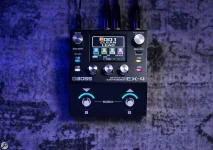
A basic MIDI pedalboard for guitar needs only a sender, a receiving device, the right connection, and matching settings. Program Change recalls stored sounds, Control Change moves or switches individual parameters, and MIDI Clock can keep tempo-based effects synchronized. The BOSS EX-4 Effects Expander includes TRS MIDI input and output for integration with other MIDI pedals, switching systems, and external clock devices.
The cable matters more than its plug shape suggests. MIDI pedalboard cables can use 5-pin DIN, TRS, or USB, and a TRS jack is not automatically wired the same way on every product. Type A and Type B arrangements have both existed, so check the manufacturer specification before assuming an ordinary stereo cable will work. Gear such as Polyend Loop with TRS and USB MIDI also shows why the transport and the messages are separate choices.
A USB MIDI pedalboard introduces another trap. Two devices with USB sockets cannot necessarily talk directly just because a cable fits between them. USB normally needs a host, such as a computer or dedicated USB MIDI host, unless one of the devices specifically provides host capability. A guitar MIDI pedalboard built around USB should therefore be planned around host support, not connector appearance.
Control Change handles a different layer. MIDI Control Change messages identify a controller number and a value, allowing compatible gear to change parameters without loading a new preset. A MIDI guitar effects controller can therefore toggle bypass, alter wet level, change feedback, or move another parameter when the receiving pedal exposes that function.
A MIDI pedalboard with expression pedal input can turn foot movement into changing CC values instead of sending the expression voltage directly to every effect. This is useful when one controller needs to address different parameters on different presets. Device support still decides what is possible. Sessions Nano MIDI Learn is a good reminder that “MIDI control” can mean a limited set of mapped functions rather than unrestricted access to every parameter.
Clock is separate again. A delay or modulation pedal may accept MIDI Clock even if its Program Change and CC implementation is fairly simple. The receiving manual is the important document here because manufacturers decide which commands their products expose, which channels they use, and whether features such as MIDI Thru, clock receive, or preset mapping can be configured.
A guitar MIDI pedalboard can also hand switching to a DAW or playback system. Program changes can then land at exact song sections while CC automation handles movement inside a section. MIDI automation in a guitar rig becomes useful once the manual version of the rig already works, because automation should replace repetitive switching rather than hide an unstable setup.
A Bluetooth MIDI pedalboard can reduce cabling where compatible hardware supports it, while wired MIDI remains straightforward to isolate when something stops responding. Whatever transport you choose, test one message path at a time. The cleanest way to learn how to use a MIDI pedalboard is to get one controller, one pedal, one channel, and one command working first, then add the next device only after the first connection behaves predictably.
A basic MIDI pedalboard for guitar needs only a sender, a receiving device, the right connection, and matching settings. Program Change recalls stored sounds, Control Change moves or switches individual parameters, and MIDI Clock can keep tempo-based effects synchronized. The BOSS EX-4 Effects Expander includes TRS MIDI input and output for integration with other MIDI pedals, switching systems, and external clock devices.
Connect one device before building the whole board
Start a MIDI pedalboard setup with one controller and one effect. Connect MIDI Out on the controller to MIDI In on the pedal, set both sides to the intended channel, then send one simple Program Change. A MIDI foot controller for guitar is much easier to troubleshoot when the first test contains no thru boxes, computers, splitters, or extra pedals.The cable matters more than its plug shape suggests. MIDI pedalboard cables can use 5-pin DIN, TRS, or USB, and a TRS jack is not automatically wired the same way on every product. Type A and Type B arrangements have both existed, so check the manufacturer specification before assuming an ordinary stereo cable will work. Gear such as Polyend Loop with TRS and USB MIDI also shows why the transport and the messages are separate choices.
A USB MIDI pedalboard introduces another trap. Two devices with USB sockets cannot necessarily talk directly just because a cable fits between them. USB normally needs a host, such as a computer or dedicated USB MIDI host, unless one of the devices specifically provides host capability. A guitar MIDI pedalboard built around USB should therefore be planned around host support, not connector appearance.
Program Change and Control Change do different jobs
A MIDI guitar pedal controller usually starts with Program Change because preset recall gives the biggest practical win. One switch can call up a stored delay sound, another can load a clean patch, and another can select a lead preset. Numbering can be annoying because some devices display presets differently from the values they receive, while larger preset libraries may also use Bank Select before Program Change.Control Change handles a different layer. MIDI Control Change messages identify a controller number and a value, allowing compatible gear to change parameters without loading a new preset. A MIDI guitar effects controller can therefore toggle bypass, alter wet level, change feedback, or move another parameter when the receiving pedal exposes that function.
A MIDI pedalboard with expression pedal input can turn foot movement into changing CC values instead of sending the expression voltage directly to every effect. This is useful when one controller needs to address different parameters on different presets. Device support still decides what is possible. Sessions Nano MIDI Learn is a good reminder that “MIDI control” can mean a limited set of mapped functions rather than unrestricted access to every parameter.
Clock is separate again. A delay or modulation pedal may accept MIDI Clock even if its Program Change and CC implementation is fairly simple. The receiving manual is the important document here because manufacturers decide which commands their products expose, which channels they use, and whether features such as MIDI Thru, clock receive, or preset mapping can be configured.
Build the live workflow around recovery
A MIDI pedalboard controller earns its space when it reduces footwork without making the rig fragile. Give each device a deliberate channel, name controller banks around songs or sounds, and keep the important manual controls reachable. A MIDI foot controller in a guitar rig should still leave you a fast route to clean, rhythm, and lead sounds if a complicated command sequence fails.A guitar MIDI pedalboard can also hand switching to a DAW or playback system. Program changes can then land at exact song sections while CC automation handles movement inside a section. MIDI automation in a guitar rig becomes useful once the manual version of the rig already works, because automation should replace repetitive switching rather than hide an unstable setup.
A Bluetooth MIDI pedalboard can reduce cabling where compatible hardware supports it, while wired MIDI remains straightforward to isolate when something stops responding. Whatever transport you choose, test one message path at a time. The cleanest way to learn how to use a MIDI pedalboard is to get one controller, one pedal, one channel, and one command working first, then add the next device only after the first connection behaves predictably.