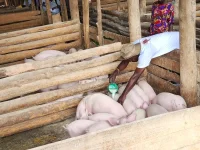
A major pig farming project in southwest Uganda is changing lives across multiple districts. Over one hundred thousand people in the Kigezi area are now involved with an initiative run by the Rukungiri Producer Cooperative Union and the Microfinance Support Centre. The central model farm in Nyakagyeme, Rukungiri District, distributes free pigs to members and trains them in breeding and soil restoration.
The cooperative's leader, Dr. Sam Akankwasa, said it started twelve years ago to fight soil exhaustion. They shifted from cattle to pigs, using manure to improve land fertility. Partnering with the finance group in 2020 allowed a huge expansion from one county to six districts. The project introduced new pig breeds to the region and uses cost-cutting methods like feeding processed grass and cow milk to piglets. Akankwasa called it a safe and highly profitable venture for people with little land, noting one pig can lead to over a hundred offspring in a year. The farm directly employs forty people and supports thousands more in trading and transport.
Lydia Namara from the Microfinance Support Centre said they formalized support with a memorandum after the cooperative approached them. They began with one hundred seed pigs, which have now multiplied into thousands distributed to hundreds of farmer groups. The centre selects organized, active communities to train and supply. Benefits reported include better school fee payments, improved coffee and banana harvests from the manure, and many new jobs for youth and women.
Individual stories highlight the project's impact. Edison Ahurira left his taxed spare parts business in Kampala after receiving training and two pigs. He now has twelve pigs on his farm. Another beneficiary, Jolly Kemiruka, runs an integrated farm in an urban area, using milk from her cows to feed piglets. She has earned millions of shillings from selling pigs, which also strengthened her local savings group. Participants say the project boosts incomes, improves food security, and offers a viable reason for people to return from cities to rural livelihoods.
The cooperative's leader, Dr. Sam Akankwasa, said it started twelve years ago to fight soil exhaustion. They shifted from cattle to pigs, using manure to improve land fertility. Partnering with the finance group in 2020 allowed a huge expansion from one county to six districts. The project introduced new pig breeds to the region and uses cost-cutting methods like feeding processed grass and cow milk to piglets. Akankwasa called it a safe and highly profitable venture for people with little land, noting one pig can lead to over a hundred offspring in a year. The farm directly employs forty people and supports thousands more in trading and transport.
Lydia Namara from the Microfinance Support Centre said they formalized support with a memorandum after the cooperative approached them. They began with one hundred seed pigs, which have now multiplied into thousands distributed to hundreds of farmer groups. The centre selects organized, active communities to train and supply. Benefits reported include better school fee payments, improved coffee and banana harvests from the manure, and many new jobs for youth and women.
Individual stories highlight the project's impact. Edison Ahurira left his taxed spare parts business in Kampala after receiving training and two pigs. He now has twelve pigs on his farm. Another beneficiary, Jolly Kemiruka, runs an integrated farm in an urban area, using milk from her cows to feed piglets. She has earned millions of shillings from selling pigs, which also strengthened her local savings group. Participants say the project boosts incomes, improves food security, and offers a viable reason for people to return from cities to rural livelihoods.