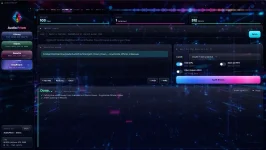
AudioPrism’s current KVR listing says every staged transcription gets a PLAYABLE% rating rather than pretending every conversion is perfect. Useful idea, but the number needs to be read for what it is.
The public product pages describe PLAYABLE% as an honesty rating for a song’s transcription. They do not publish a formula, test set, tolerance window, weighting scheme, or validation study that would let you compare the percentage directly with academic piano-transcription benchmarks. So 82% PLAYABLE should not be read as “82% of every note is scientifically correct.”
It fits the broader AudioPrism staged transcription workflow better than pretending all generated MIDI deserves the same trust. Some source material is simply easier. A clean piano passage gives the system a different job from a dense mix with drums, vocals, sustained pads, guitars, and piano sharing the same space.
The catch is that PLAYABLE% is proprietary. Without a public definition, you cannot tell how much the score cares about pitch errors, missing notes, extra notes, onset timing, note length, velocity, hand assignment, or the quality of the source separation. Treat it as an in-app reliability cue, not a universal measurement unit.
The distinction matters when two songs show similar percentages. One transcription might contain a few wrong pitches but solid timing, while another could have the right notes with messy offsets and extra short notes. Both may feel very different under your fingers even if one headline percentage looks close.
The hierarchical frequency-time piano transcription study is a useful example because it reports distinct scores for frames, notes, notes with offsets, and notes with both offsets and velocity. Those numbers fall apart in different ways. A system can be excellent at spotting which pitches started while being less reliable about exactly when they ended or how strongly they were played.
For practice software, those details are not academic trivia. A wrong onset can make a correct pitch arrive early. A bad offset can leave notes hanging together and turn clean playing into mush, while a missed inner chord tone changes the shape your hand is supposed to learn.
Velocity deserves its own skepticism too. Hitting the correct note at roughly the correct moment is enough for many falling-note exercises, but expressive piano playing asks for more. A transcription that captures pitches well but flattens dynamics can still be useful for learning the keyboard pattern while being a poor record of the original performance.
Chords deserve extra attention because polyphonic transcription is harder than following a single clean line. Inner notes can disappear, repeated notes can merge, and overlapping harmonics can produce extras. A chart may still look convincing at normal speed because the broad harmony survives.
Use hands-separate practice as another check rather than only as a learning convenience. A suspicious left-hand jump or impossible right-hand cluster becomes easier to spot when the other hand is muted. If the transcription fights basic fingering logic, compare it with the audio before assuming your hands are the problem.
Source choice can change the result as well. Prism Vault lets you stage isolated stems as well as full-song imports, and the cleaner piano-focused source can remove competing material before transcription. Cleaner does not mean guaranteed correct, since stem separation can introduce bleed or erase detail of its own.
PLAYABLE% is most useful before practice begins, when you need a quick signal about how cautiously to approach a generated chart. Once you start checking pitches, timing, chord shapes, and note lengths against the song, the actual transcription becomes more informative than the percentage printed beside it.
The public product pages describe PLAYABLE% as an honesty rating for a song’s transcription. They do not publish a formula, test set, tolerance window, weighting scheme, or validation study that would let you compare the percentage directly with academic piano-transcription benchmarks. So 82% PLAYABLE should not be read as “82% of every note is scientifically correct.”
PLAYABLE% is a product rating, not a benchmark
The point of the number is practical. AudioPrism turns separated material into MIDI and then feeds that transcription into Prism Keys, where you actually have to play the notes. A confidence-style rating can warn you that one chart is likely to need more checking than another before you spend an evening drilling it.It fits the broader AudioPrism staged transcription workflow better than pretending all generated MIDI deserves the same trust. Some source material is simply easier. A clean piano passage gives the system a different job from a dense mix with drums, vocals, sustained pads, guitars, and piano sharing the same space.
The catch is that PLAYABLE% is proprietary. Without a public definition, you cannot tell how much the score cares about pitch errors, missing notes, extra notes, onset timing, note length, velocity, hand assignment, or the quality of the source separation. Treat it as an in-app reliability cue, not a universal measurement unit.
The distinction matters when two songs show similar percentages. One transcription might contain a few wrong pitches but solid timing, while another could have the right notes with messy offsets and extra short notes. Both may feel very different under your fingers even if one headline percentage looks close.
Transcription accuracy has more than one moving part
Academic automatic piano transcription usually breaks the problem into separate measurements. Researchers commonly report precision, recall, and F1 for note events, then tighten the test by requiring correct onsets, offsets, and sometimes velocity. Frame-level accuracy can be reported separately too.The hierarchical frequency-time piano transcription study is a useful example because it reports distinct scores for frames, notes, notes with offsets, and notes with both offsets and velocity. Those numbers fall apart in different ways. A system can be excellent at spotting which pitches started while being less reliable about exactly when they ended or how strongly they were played.
For practice software, those details are not academic trivia. A wrong onset can make a correct pitch arrive early. A bad offset can leave notes hanging together and turn clean playing into mush, while a missed inner chord tone changes the shape your hand is supposed to learn.
Velocity deserves its own skepticism too. Hitting the correct note at roughly the correct moment is enough for many falling-note exercises, but expressive piano playing asks for more. A transcription that captures pitches well but flattens dynamics can still be useful for learning the keyboard pattern while being a poor record of the original performance.
Your own playback check still matters
The quickest sanity check is to listen and watch at the same time. Slow the song, loop a short section, and compare the falling notes with the audible piano part before committing the passage to muscle memory. If a note appears where you cannot hear one, or the audio clearly contains a pitch the chart never shows, the percentage does not override the evidence in front of you.Chords deserve extra attention because polyphonic transcription is harder than following a single clean line. Inner notes can disappear, repeated notes can merge, and overlapping harmonics can produce extras. A chart may still look convincing at normal speed because the broad harmony survives.
Use hands-separate practice as another check rather than only as a learning convenience. A suspicious left-hand jump or impossible right-hand cluster becomes easier to spot when the other hand is muted. If the transcription fights basic fingering logic, compare it with the audio before assuming your hands are the problem.
Source choice can change the result as well. Prism Vault lets you stage isolated stems as well as full-song imports, and the cleaner piano-focused source can remove competing material before transcription. Cleaner does not mean guaranteed correct, since stem separation can introduce bleed or erase detail of its own.
PLAYABLE% is most useful before practice begins, when you need a quick signal about how cautiously to approach a generated chart. Once you start checking pitches, timing, chord shapes, and note lengths against the song, the actual transcription becomes more informative than the percentage printed beside it.