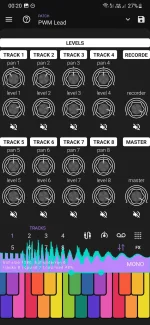
Teenage Engineering’s Pocket Operators can follow an external click-track sync signal through their 3.5 mm input, while Digitron supports Pocket Operator synchronization. Those two facts matter because this is not the same job as sending MIDI notes from a keyboard. The sync connection is mainly about keeping sequencers moving at the same tempo.
Digitron already has its own 16-step sequencer, pattern chains, probability, retrigger, and eight synth tracks. A Pocket Operator already has its own patterns and sound engine too. Digitron’s Pocket Operator synchronization lets those separate machines share timing without pretending one has become a remote control for the other.
The useful mindset is simple. Let each box keep making its own part, then use sync to stop the grooves from slowly drifting apart. Notes, parameter changes, and sound design still belong to the device producing them.
This is why Pocket Operator sync should not be casually lumped together with MIDI Clock. MIDI Clock uses digital MIDI timing messages at 24 pulses per quarter note, while Teenage Engineering describes Pocket Operators as using a slower sync pulse. Its current OP-XY instructions use an eighth-note clock output when synchronizing a Pocket Operator.
The distinction matters when you start adding adapters and other hardware. A cable can physically fit without the receiving device understanding the timing format on it. The useful question is not whether two devices have a socket, but whether the receiving side is listening for the kind of pulse the sender actually provides.
Separating timing from the musical content is a well-established engineering approach. Systems that carry timing reference pulses beside audio use the same basic division of labor. One path tells equipment when events belong, while another carries the material you actually hear.
This setting is easy to overlook because the machine will still power up and play patterns when the wrong mode is selected. A bad sync mode can leave you with no useful clock, an unexpected mono signal, or a click occupying the channel you thought was ordinary audio. Fix the routing before blaming the sequencer.
If Digitron is acting as the timing source in your particular setup, the receiving Pocket Operator needs to be configured for external sync input. If the Pocket Operator is elsewhere in a longer chain, its mode may need to pass timing onward instead. The position of the device changes the correct setting.
Use a standard stereo 3.5 mm connection on the Pocket Operator side and keep the sync level within the limits Teenage Engineering specifies. Its manuals warn that external sync should not exceed 5 V peak-to-peak. Random modular-level clock signals are therefore not something to shove into the input without checking their level first.
This separation is useful in a small rig. Digitron can handle a bass line or evolving modular patch while a Pocket Operator handles drums, samples, or another repeating part. You can change one pattern without rewriting the other, and both can continue running against the same pulse.
Start behavior deserves the same attention as tempo. Teenage Engineering’s guides have the receiving Pocket Operator wait for sync, then begin when the master starts sending clock. If two devices are perfectly matched in BPM but their patterns begin on different beats, tempo is not the problem anymore.
Keep the first test painfully simple. Run one obvious four-on-the-floor pattern on the Pocket Operator and an equally obvious sequence in Digitron, then listen for several minutes before adding fills or probability. Once the basic lock is solid, the hardware setup becomes useful instead of becoming another troubleshooting session.
Digitron already has its own 16-step sequencer, pattern chains, probability, retrigger, and eight synth tracks. A Pocket Operator already has its own patterns and sound engine too. Digitron’s Pocket Operator synchronization lets those separate machines share timing without pretending one has become a remote control for the other.
The useful mindset is simple. Let each box keep making its own part, then use sync to stop the grooves from slowly drifting apart. Notes, parameter changes, and sound design still belong to the device producing them.
Pocket Operator sync is an audio-pulse system
Pocket Operators can synchronize from a click track through their line connection. Teenage Engineering provides several sync modes because the 3.5 mm jacks may need to carry timing, audio, or both, depending on where the unit sits in a chain. When sync is active, audio and sync can be separated across the stereo connection.This is why Pocket Operator sync should not be casually lumped together with MIDI Clock. MIDI Clock uses digital MIDI timing messages at 24 pulses per quarter note, while Teenage Engineering describes Pocket Operators as using a slower sync pulse. Its current OP-XY instructions use an eighth-note clock output when synchronizing a Pocket Operator.
The distinction matters when you start adding adapters and other hardware. A cable can physically fit without the receiving device understanding the timing format on it. The useful question is not whether two devices have a socket, but whether the receiving side is listening for the kind of pulse the sender actually provides.
Separating timing from the musical content is a well-established engineering approach. Systems that carry timing reference pulses beside audio use the same basic division of labor. One path tells equipment when events belong, while another carries the material you actually hear.
The Pocket Operator mode decides what the jack does
Pocket Operators default to SY0, which leaves synchronization off. Teenage Engineering’s current guides use SY2 when a Pocket Operator receives sync from an external device while keeping stereo audio on its output. Other modes combine mono audio and sync, so several units can be chained.This setting is easy to overlook because the machine will still power up and play patterns when the wrong mode is selected. A bad sync mode can leave you with no useful clock, an unexpected mono signal, or a click occupying the channel you thought was ordinary audio. Fix the routing before blaming the sequencer.
If Digitron is acting as the timing source in your particular setup, the receiving Pocket Operator needs to be configured for external sync input. If the Pocket Operator is elsewhere in a longer chain, its mode may need to pass timing onward instead. The position of the device changes the correct setting.
Use a standard stereo 3.5 mm connection on the Pocket Operator side and keep the sync level within the limits Teenage Engineering specifies. Its manuals warn that external sync should not exceed 5 V peak-to-peak. Random modular-level clock signals are therefore not something to shove into the input without checking their level first.
Sync keeps tempo together, not every musical decision
A synchronized Pocket Operator does not suddenly receive Digitron’s synth patch, notes, probability values, or Parameter Locks. The clock gives both sequencers a common timing reference. Each device still decides which sounds and steps happen inside its own pattern.This separation is useful in a small rig. Digitron can handle a bass line or evolving modular patch while a Pocket Operator handles drums, samples, or another repeating part. You can change one pattern without rewriting the other, and both can continue running against the same pulse.
Start behavior deserves the same attention as tempo. Teenage Engineering’s guides have the receiving Pocket Operator wait for sync, then begin when the master starts sending clock. If two devices are perfectly matched in BPM but their patterns begin on different beats, tempo is not the problem anymore.
Keep the first test painfully simple. Run one obvious four-on-the-floor pattern on the Pocket Operator and an equally obvious sequence in Digitron, then listen for several minutes before adding fills or probability. Once the basic lock is solid, the hardware setup becomes useful instead of becoming another troubleshooting session.