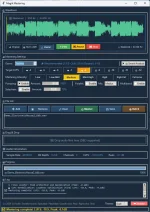
Q-Audio lists six pumping-compression modes and Librosa-based sidechain ducking as separate features in Magik Mastering. The distinction matters because pumping describes an audible gain envelope, while sidechaining describes how a compressor decides when to move.
A mix can pump with no external trigger at all. Put a conventional compressor across a drum-heavy bus, let the kick dominate its detector, and a long enough recovery can make the whole bus dip and swell. Sidechain compression can do the opposite, moving only enough to clear a kick from a bass without announcing itself as an effect.
Q-Audio keeps Magik Mastering’s pumping and sidechain processors separate in its feature list. Nothing public about the app’s implementation proves how the six pumping modes generate their control signal, so treating them as ordinary kick-keyed sidechain presets would be guesswork. What can be said safely is that the product distinguishes the breathing effect from its Librosa-tracked ducking feature.
A compressor can create unwanted pumping for the same reason. Heavy low-frequency hits drive its detector, gain falls across the whole program, and recovery becomes audible between hits. Engineers often try to suppress this behavior on a mix bus, while dance production sometimes leans into it deliberately.
The envelope itself comes from detector level, threshold, ratio, attack, release, and any smoothing inside the design. A feedforward compressor sidechain design describes an envelope detector feeding threshold and gain-control stages, with attack and release governing the detector’s time behavior. Nothing in that architecture requires an external kick to make gain rise and fall rhythmically.
A short, shallow duck may simply stop the kick and bass from piling up at the same instant. The bass returns so quickly, and by so little, that nobody hears a breathing effect. Calling every such move “pumping” blurs a useful distinction between rhythmic sound design and corrective dynamics.
The reverse confusion happens too. Producers hear a pulsing bus compressor and assume sidechaining must be involved, even when the unit is listening to its own program signal. A loud four-on-the-floor kick can impose a periodic envelope on everything sharing the compressor because each kick repeatedly pushes the detector harder than the material between hits.
Technical sidechain language gets messy because compressors already contain a detector or control path, sometimes called the sidechain, even before an external key is selected. An external input changes who supplies that detector signal. A detector filter changes what the detector hears from its current source, which is a different operation and one Goldmidi already treats separately.
A ghost trigger breaks that dependency. Producers can feed the sidechain from a short muted pulse placed on the desired rhythm, leaving the audible kick free to change, drop out, or carry a longer tail. The pump can continue through a breakdown even when no kick reaches the master bus.
This is where simple “match release to tempo” advice starts to wobble. Release does not operate in a vacuum. If one trigger keeps the detector elevated longer, recovery starts from a different control history than it does with a tiny ghost pulse, so identical release settings need not produce identical audible motion.
A dedicated trigger also makes depth easier to stabilize. Variations in the audible kick’s level can alter how far the compressor crosses the threshold, while a fixed control pulse can hit it more consistently. You still have to choose the amount and recovery by ear, but at least the rhythm is no longer being redrawn every time the kick sample, velocity, or processing changes.
A mix can pump with no external trigger at all. Put a conventional compressor across a drum-heavy bus, let the kick dominate its detector, and a long enough recovery can make the whole bus dip and swell. Sidechain compression can do the opposite, moving only enough to clear a kick from a bass without announcing itself as an effect.
Pumping lives in the gain envelope
Pumping begins when repeated gain reduction becomes part of rhythm rather than disappearing behind the mix. The compressor closes down, recovers, closes again, and the return to level becomes as audible as the reduction itself. Release timing usually shapes the character more than the label on the routing menu.Q-Audio keeps Magik Mastering’s pumping and sidechain processors separate in its feature list. Nothing public about the app’s implementation proves how the six pumping modes generate their control signal, so treating them as ordinary kick-keyed sidechain presets would be guesswork. What can be said safely is that the product distinguishes the breathing effect from its Librosa-tracked ducking feature.
A compressor can create unwanted pumping for the same reason. Heavy low-frequency hits drive its detector, gain falls across the whole program, and recovery becomes audible between hits. Engineers often try to suppress this behavior on a mix bus, while dance production sometimes leans into it deliberately.
The envelope itself comes from detector level, threshold, ratio, attack, release, and any smoothing inside the design. A feedforward compressor sidechain design describes an envelope detector feeding threshold and gain-control stages, with attack and release governing the detector’s time behavior. Nothing in that architecture requires an external kick to make gain rise and fall rhythmically.
Sidechain describes the trigger relationship
In everyday DAW language, sidechain compression usually means one source controls gain reduction on another. Put a compressor on the bass, feed its external key from the kick, and the kick controls the detector while the bass is the signal being turned down. You can make that move obvious or almost invisible.A short, shallow duck may simply stop the kick and bass from piling up at the same instant. The bass returns so quickly, and by so little, that nobody hears a breathing effect. Calling every such move “pumping” blurs a useful distinction between rhythmic sound design and corrective dynamics.
The reverse confusion happens too. Producers hear a pulsing bus compressor and assume sidechaining must be involved, even when the unit is listening to its own program signal. A loud four-on-the-floor kick can impose a periodic envelope on everything sharing the compressor because each kick repeatedly pushes the detector harder than the material between hits.
Technical sidechain language gets messy because compressors already contain a detector or control path, sometimes called the sidechain, even before an external key is selected. An external input changes who supplies that detector signal. A detector filter changes what the detector hears from its current source, which is a different operation and one Goldmidi already treats separately.
Trigger shape changes the pump before release does
Using the audible kick as a key ties compression behavior to the kick’s own envelope. A long, boomy kick can keep the detector driven longer than a short click, so two kick samples can produce different duck lengths even when threshold, ratio, attack, and release never move. The trigger is part of the timing system.A ghost trigger breaks that dependency. Producers can feed the sidechain from a short muted pulse placed on the desired rhythm, leaving the audible kick free to change, drop out, or carry a longer tail. The pump can continue through a breakdown even when no kick reaches the master bus.
This is where simple “match release to tempo” advice starts to wobble. Release does not operate in a vacuum. If one trigger keeps the detector elevated longer, recovery starts from a different control history than it does with a tiny ghost pulse, so identical release settings need not produce identical audible motion.
A dedicated trigger also makes depth easier to stabilize. Variations in the audible kick’s level can alter how far the compressor crosses the threshold, while a fixed control pulse can hit it more consistently. You still have to choose the amount and recovery by ear, but at least the rhythm is no longer being redrawn every time the kick sample, velocity, or processing changes.