A mono fold-down sums the left and right channels, so a pure Side component cancels even when the stereo signal is behaving exactly as designed. Losing width in mono is therefore not automatic proof of a phase fault, and treating every change as one can send you toward the wrong fix.
Stereo contains two useful descriptions of the same signal. Left and right tell you what each speaker receives, while Mid and Side describe what the channels share and what differs between them. A mono sum keeps the shared part and removes the differential part, which is why some ambience, width, and spatial texture can disappear without anything being broken.
Now collapse the decoded signal to mono. The positive and negative versions of Side meet each other and cancel, leaving Mid behind, and nothing has malfunctioned there. Cancellation is built into the representation, and the missing material can simply be information whose job was to create a left-right difference.
A hard-panned sound makes the distinction easier to see. Put a mono guitar entirely on the left and silence the right channel, and the guitar does not become Side-only. Its encoded version contributes to both Mid and Side, so the mono sum still contains the guitar, although its level depends on the summing convention and gain staging.
True Side-only material is different. It appears with opposite polarity across the decoded left and right channels, which gives you stereo difference but no surviving mono component. Stereo reverb, decorrelated ambience, synthetic width, and certain microphone relationships can contain frequency regions that lean heavily toward this behavior without making the entire stereo signal defective.
Polarity opposition is the extreme version. Two otherwise identical signals with opposite polarity sum to zero across the whole shared waveform. Smaller time offsets are messier because their phase relationship changes with frequency, creating peaks and notches instead of one clean disappearance.
This is where language gets sloppy. Producers often call any stereo information that weakens in mono “out of phase,” even when the missing part is simply the difference signal doing what the matrix requires. A repair decision should separate those cases because reducing destructive interchannel phase and reconstructing useful center information are not the same operation.
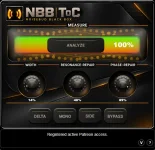
Noisebud’s approach makes that split unusually explicit. Its targeted mono compatibility repair separates phase-related correction from spectral information that is strong in Side but weak in the mono sum. One path deals with harmful relationships between similar channel content, while the other tries to preserve more identity in the center without dragging the whole stereo field inward.
Compare the stereo version with a level-matched mono fold-down and focus on frequency-specific changes. Simple narrowing usually feels like reduced space around a stable core. Phase trouble tends to alter tone more aggressively because some bands reinforce while others cancel, although real program material can contain both behaviors at once.
Side soloing adds another clue, but it needs careful interpretation. Hearing a guitar texture in Side does not mean the guitar will vanish in mono, since the same performance may also have plenty of Mid energy. What matters is how much of the sound's recognizable identity depends on differential information that the mono sum cannot retain.
The practical target is not zero change between stereo and mono. Stereo is supposed to contain information that mono cannot reproduce. The useful goal is preserving the musical parts that must survive, while allowing width, ambience, and lateral detail to reduce naturally when two channels become one.
Stereo contains two useful descriptions of the same signal. Left and right tell you what each speaker receives, while Mid and Side describe what the channels share and what differs between them. A mono sum keeps the shared part and removes the differential part, which is why some ambience, width, and spatial texture can disappear without anything being broken.
Mono summing removes the difference signal by design
In a conventional Mid-Side matrix, Mid comes from left plus right and Side comes from left minus right, with scaling added to keep levels sensible. Decoding reverses the process by combining Mid with positive Side for one channel and negative Side for the other. The same sum-and-difference logic appears in modern stereo signal processing because separating shared and differential information remains useful well beyond music mixing.Now collapse the decoded signal to mono. The positive and negative versions of Side meet each other and cancel, leaving Mid behind, and nothing has malfunctioned there. Cancellation is built into the representation, and the missing material can simply be information whose job was to create a left-right difference.
A hard-panned sound makes the distinction easier to see. Put a mono guitar entirely on the left and silence the right channel, and the guitar does not become Side-only. Its encoded version contributes to both Mid and Side, so the mono sum still contains the guitar, although its level depends on the summing convention and gain staging.
True Side-only material is different. It appears with opposite polarity across the decoded left and right channels, which gives you stereo difference but no surviving mono component. Stereo reverb, decorrelated ambience, synthetic width, and certain microphone relationships can contain frequency regions that lean heavily toward this behavior without making the entire stereo signal defective.
Phase cancellation is a different failure mode
Destructive phase interaction happens when related left and right content reaches the mono sum with enough phase difference to reduce particular frequencies. A short delay between channels is the familiar case. The delay produces frequency-dependent reinforcement and cancellation after summing, so the result can sound hollow, comb-filtered, or radically different rather than merely narrower.Polarity opposition is the extreme version. Two otherwise identical signals with opposite polarity sum to zero across the whole shared waveform. Smaller time offsets are messier because their phase relationship changes with frequency, creating peaks and notches instead of one clean disappearance.
This is where language gets sloppy. Producers often call any stereo information that weakens in mono “out of phase,” even when the missing part is simply the difference signal doing what the matrix requires. A repair decision should separate those cases because reducing destructive interchannel phase and reconstructing useful center information are not the same operation.
Noisebud’s approach makes that split unusually explicit. Its targeted mono compatibility repair separates phase-related correction from spectral information that is strong in Side but weak in the mono sum. One path deals with harmful relationships between similar channel content, while the other tries to preserve more identity in the center without dragging the whole stereo field inward.
The mono change tells you what kind of problem exists
Start by listening to what disappears rather than staring at one global meter. A wide pad losing airy movement can be perfectly acceptable if its notes, rhythm, and tonal body remain intact. A lead hook losing its defining midrange, or a bass changing pitch weight because deep notches appear, deserves much closer attention.Compare the stereo version with a level-matched mono fold-down and focus on frequency-specific changes. Simple narrowing usually feels like reduced space around a stable core. Phase trouble tends to alter tone more aggressively because some bands reinforce while others cancel, although real program material can contain both behaviors at once.
Side soloing adds another clue, but it needs careful interpretation. Hearing a guitar texture in Side does not mean the guitar will vanish in mono, since the same performance may also have plenty of Mid energy. What matters is how much of the sound's recognizable identity depends on differential information that the mono sum cannot retain.
The practical target is not zero change between stereo and mono. Stereo is supposed to contain information that mono cannot reproduce. The useful goal is preserving the musical parts that must survive, while allowing width, ambience, and lateral detail to reduce naturally when two channels become one.