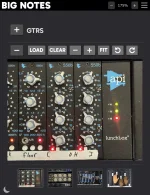
Studio engineers have long used recall sheets to record outboard settings because analog controls do not automatically return with a saved DAW session. Phone cameras made the job faster, and close-up images are now a sensible part of session documentation. A photograph still captures only what the lens can see.
One wide rack shot can look useful until a compressor pointer lands somewhere around noon. Detented controls create a different problem because a tiny visual difference can represent a whole click. Switches, link states, meter modes, patching, and gain relationships can also disappear inside an otherwise clear picture.
Good recall is less about collecting evidence and more about removing ambiguity. You want enough detail to rebuild the signal path without guessing which channel, cable, switch position, or version belonged to the sound you approved.
Continuous controls need context too. Record the printed value when the scale is precise, then add a plain description when the pointer falls between markings. Toggle switches, pads, filters, sidechain selectors, stereo links, bypass states, and meter modes deserve explicit notes because a photograph may not preserve their meaning.
Gain deserves its own attention. A compressor can react differently when the level feeding it changes, even if its attack and release controls return to familiar positions. Capture the upstream preamp or send level, the processor input setting where applicable, and the output trim used to rejoin the session.
A simple rule helps here. Photograph what is visually distinctive, write what is mechanically precise, and do both when reconstructing a setting by ear would waste time.
Session context matters just as much. One rack unit may serve a vocal during tracking, a drum bus during mixing, or a stereo pair later. Label the recall by song, track, or bus, date, and mix version, then keep those details beside the photo and text hardware recall instead of leaving unlabeled images in a phone gallery.
Version names prevent a quieter failure. If you changed the threshold for Mix 5 after photographing Mix 4, a folder called final recall no longer tells you which state produced the approved bounce. Date stamps help, but a version label tied to the actual deliverable is cleaner.
Patching deserves the same discipline. A note saying 1176 on vocal is weak because it does not identify the physical unit, device channel, or insert point. A useful record names the device, channel, insert position, send and return, plus any unusual routing choice.
If the rack holds two examples of the same processor, record the physical unit as well as the model name. Use a label such as COMP-2 or rack position 4, so a later recall does not land on a different box with similar controls. Channel identity matters on dual-channel units for the same reason.
Newer hybrid designs can narrow this gap through digitally recallable analog hardware controls that let software save settings and command compatible hardware through a control connection. Ordinary vintage compressors, preamps, equalizers, pedals, and many modern analog processors do not gain that behavior merely because they sit on a DAW insert.
The last record worth keeping is the one people often skip after documenting the knobs. Save the exact session or mix version associated with the hardware state, then keep its recall photos and notes under the same name. When a revision arrives weeks later, you rebuild one known signal path instead of combining a remembered patch with settings from several versions.
One wide rack shot can look useful until a compressor pointer lands somewhere around noon. Detented controls create a different problem because a tiny visual difference can represent a whole click. Switches, link states, meter modes, patching, and gain relationships can also disappear inside an otherwise clear picture.
Good recall is less about collecting evidence and more about removing ambiguity. You want enough detail to rebuild the signal path without guessing which channel, cable, switch position, or version belonged to the sound you approved.
Reliable recall starts with controls you can actually read
Take close photos square to the front panel rather than shooting the entire rack from an angle. Perspective can make pointer positions harder to judge, especially on small knobs with crowded scales. If a control is stepped or detented, write its position as clicks from a fixed end point whenever the markings leave doubt.Continuous controls need context too. Record the printed value when the scale is precise, then add a plain description when the pointer falls between markings. Toggle switches, pads, filters, sidechain selectors, stereo links, bypass states, and meter modes deserve explicit notes because a photograph may not preserve their meaning.
Gain deserves its own attention. A compressor can react differently when the level feeding it changes, even if its attack and release controls return to familiar positions. Capture the upstream preamp or send level, the processor input setting where applicable, and the output trim used to rejoin the session.
A simple rule helps here. Photograph what is visually distinctive, write what is mechanically precise, and do both when reconstructing a setting by ear would waste time.
Signal flow belongs in the recall record
A perfect picture of an equalizer cannot tell you where it sat in the chain. Record the hardware order, interface send and return, patchbay points, and whether the path was mono, dual mono, stereo, or linked. External sidechains need their source written down as well.Session context matters just as much. One rack unit may serve a vocal during tracking, a drum bus during mixing, or a stereo pair later. Label the recall by song, track, or bus, date, and mix version, then keep those details beside the photo and text hardware recall instead of leaving unlabeled images in a phone gallery.
Version names prevent a quieter failure. If you changed the threshold for Mix 5 after photographing Mix 4, a folder called final recall no longer tells you which state produced the approved bounce. Date stamps help, but a version label tied to the actual deliverable is cleaner.
Patching deserves the same discipline. A note saying 1176 on vocal is weak because it does not identify the physical unit, device channel, or insert point. A useful record names the device, channel, insert position, send and return, plus any unusual routing choice.
If the rack holds two examples of the same processor, record the physical unit as well as the model name. Use a label such as COMP-2 or rack position 4, so a later recall does not land on a different box with similar controls. Channel identity matters on dual-channel units for the same reason.
Digital recall still has blind spots
Hardware with scene memory can reduce manual work without eliminating it. Some systems store broad groups of digital parameters while leaving certain analog gain controls outside the snapshot. Others recall an internal value while an unmotorized physical control still sits elsewhere, so a saved scene does not prove every front-panel state is restored.Newer hybrid designs can narrow this gap through digitally recallable analog hardware controls that let software save settings and command compatible hardware through a control connection. Ordinary vintage compressors, preamps, equalizers, pedals, and many modern analog processors do not gain that behavior merely because they sit on a DAW insert.
The last record worth keeping is the one people often skip after documenting the knobs. Save the exact session or mix version associated with the hardware state, then keep its recall photos and notes under the same name. When a revision arrives weeks later, you rebuild one known signal path instead of combining a remembered patch with settings from several versions.