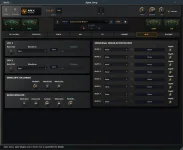
Apex Amp’s Dynamic Dual-Mic Cabinet Studio includes mic distance, axis proximity, phase invert, tilt angle, and dedicated high- and low-cut controls. Version 1.2.0 makes Mic A and Mic B draggable on the speaker view, so placement now feels more like a recording choice than entering cabinet values.
Moving a virtual mic is easy. Knowing why the result changes is the useful part. The cabinet section can alter attack, brightness, body, phase interaction, and the way two microphone signals sit together before you reach for post-EQ.
The Apex Amp cabinet mic controls give you a visual way into those decisions, but the speaker graphic should not become a hunt for one perfect spot. Small moves solve different problems, and two similar-looking positions can behave differently once Mic A and Mic B are blended.
Lateral position is only one variable. Angling a mic off-axis changes how the microphone receives the speaker, and it is not identical to sliding the mic sideways while keeping it pointed straight ahead. Both moves can soften an aggressive sound, but they reach that result through different geometry.
Apex gives you axis- and angle-related control inside a cabinet system built around impulse responses. Use the center-to-edge move when the basic spectral balance is wrong. Try changing the angle when the tone has the right weight but the direct attack feels too hard.
Distance deserves the same care. It is tempting to treat proximity as a bass control, yet real microphone behavior is messier. Controlled measurements of microphone proximity show that spectral changes with distance depend on the microphone, source, and material being reproduced.
Apex explicitly models proximity behavior, so moving a mic back is better judged as a placement decision than a shortcut for removing lows. Listen to the whole envelope. A setting can lose close-up weight while also changing how immediate the pick attack feels.
Two mics also introduce a problem that one mic cannot. If their versions of the same speaker signal do not line up well, some frequencies reinforce while others cancel. The result can sound thinner, nasal, strangely wide, or simply weaker when both mics are active.
Apex describes its cabinet system as phase coherent and provides inter-microphone phase handling along with phase inversion. The phase invert option is still a coarse move, not a magic repair for every poor pairing. Treat it as a comparison tool while you adjust position and balance.
A useful check is simple. Get Mic A sounding convincing by itself, then bring Mic B in quietly. If the guitar loses weight as the second mic gets louder, investigate the phase relationship before compensating with extra bass or another EQ boost.
A pair that becomes louder and fuller is not automatically better either. Excessive reinforcement can leave rhythm guitars swollen around the low mids, especially once several takes are layered.
If a bright position gives you the attack you want but leaves unnecessary top-end hash, a high-cut can preserve the placement while trimming the excess. If a fuller mic adds useful weight but also brings low-end clutter, the cabinet filter can clean the floor without discarding the mic choice.
Keep post-EQ for problems that remain after the cabinet sound feels right. Large corrective curves can work, but they often hide the reason the tone needed correction. A small mic move may get you closer with less processing.
Stereo placement adds another choice because Apex exposes independent panning for Mic A and Mic B. Hard separation can make the cabinet feel wider, while a tighter pan keeps the pair behaving more like one composite source. Judge the width in the track, not in solo.
Change one physical idea at a time. Set the first mic for the main character, use the second to add something genuinely different, check the pair for cancellation, then make small cabinet-filter moves. Stop once the guitar occupies the space you need.
Moving a virtual mic is easy. Knowing why the result changes is the useful part. The cabinet section can alter attack, brightness, body, phase interaction, and the way two microphone signals sit together before you reach for post-EQ.
The Apex Amp cabinet mic controls give you a visual way into those decisions, but the speaker graphic should not become a hunt for one perfect spot. Small moves solve different problems, and two similar-looking positions can behave differently once Mic A and Mic B are blended.
Moving across the cone changes more than treble
A close mic aimed toward the center of a guitar speaker will usually capture a more forward top end. Move it toward the outer cone and the sound generally becomes smoother and less cutting. Distorted guitars make the difference obvious because fizz, pick definition, and upper-mid bite all move with the placement.Lateral position is only one variable. Angling a mic off-axis changes how the microphone receives the speaker, and it is not identical to sliding the mic sideways while keeping it pointed straight ahead. Both moves can soften an aggressive sound, but they reach that result through different geometry.
Apex gives you axis- and angle-related control inside a cabinet system built around impulse responses. Use the center-to-edge move when the basic spectral balance is wrong. Try changing the angle when the tone has the right weight but the direct attack feels too hard.
Distance deserves the same care. It is tempting to treat proximity as a bass control, yet real microphone behavior is messier. Controlled measurements of microphone proximity show that spectral changes with distance depend on the microphone, source, and material being reproduced.
Apex explicitly models proximity behavior, so moving a mic back is better judged as a placement decision than a shortcut for removing lows. Listen to the whole envelope. A setting can lose close-up weight while also changing how immediate the pick attack feels.
Two microphones can create a better tone or a hollow one
Mic A and Mic B let you build a cabinet sound from two perspectives instead of forcing one microphone to do everything. One can hold the brighter edge while the other supplies body. Blending them can be more natural than forcing a single mic position through severe EQ.Two mics also introduce a problem that one mic cannot. If their versions of the same speaker signal do not line up well, some frequencies reinforce while others cancel. The result can sound thinner, nasal, strangely wide, or simply weaker when both mics are active.
Apex describes its cabinet system as phase coherent and provides inter-microphone phase handling along with phase inversion. The phase invert option is still a coarse move, not a magic repair for every poor pairing. Treat it as a comparison tool while you adjust position and balance.
A useful check is simple. Get Mic A sounding convincing by itself, then bring Mic B in quietly. If the guitar loses weight as the second mic gets louder, investigate the phase relationship before compensating with extra bass or another EQ boost.
A pair that becomes louder and fuller is not automatically better either. Excessive reinforcement can leave rhythm guitars swollen around the low mids, especially once several takes are layered.
Cabinet filters finish what placement starts
Apex includes dedicated high- and low-cut filtering in the cabinet section, so you do not have to solve every edge case by dragging a microphone around. Placement should establish the character first. Filtering can remove what is left.If a bright position gives you the attack you want but leaves unnecessary top-end hash, a high-cut can preserve the placement while trimming the excess. If a fuller mic adds useful weight but also brings low-end clutter, the cabinet filter can clean the floor without discarding the mic choice.
Keep post-EQ for problems that remain after the cabinet sound feels right. Large corrective curves can work, but they often hide the reason the tone needed correction. A small mic move may get you closer with less processing.
Stereo placement adds another choice because Apex exposes independent panning for Mic A and Mic B. Hard separation can make the cabinet feel wider, while a tighter pan keeps the pair behaving more like one composite source. Judge the width in the track, not in solo.
Change one physical idea at a time. Set the first mic for the main character, use the second to add something genuinely different, check the pair for cancellation, then make small cabinet-filter moves. Stop once the guitar occupies the space you need.