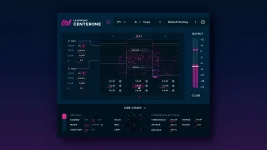
CenterOne 3 can expose extracted Left, Center, and Right components as separate auxiliary outputs in DAWs that support plug-in auxiliary routing. Those feeds are useful because you can process the extracted pieces outside the plug-in instead of keeping every spatial decision inside one insert.
The easy mistake is reading L and R as copies of the original stereo input channels. They are not. CenterOne first identifies the phantom-center component, then its extracted Left and Right components represent the spatial information remaining around that center.
The CenterOne 3 LCR processing makes more sense once you treat L, C, and R as a working decomposition of the stereo signal. Recombine untouched components at unity and the point is transparent reconstruction, while separate processing deliberately changes the result.
The same general problem appears in AES work on extracting voice from the center of a stereo image, where stereo material is separated so center information can be handled independently. CenterOne uses its own extraction method, but the practical idea is similar enough to matter when routing it.
C is whatever the extraction currently defines as phantom-center material. Change the extraction width and the contents of C change with it, so the CenterOne 3 extraction-width workflow is worth sorting out before you print or process any auxiliary stem.
L and R need the same respect. They contain the information left around the extracted center, not untouched copies of input left and input right. Put a compressor on the L aux and you are processing one extracted spatial component, not simply compressing everything that entered through the original left channel.
A vocal-heavy center is an obvious case. The C feed can go through compression while the extracted sides remain open, then the three paths can be balanced again in the host. A different mix might need the opposite treatment, with side components getting extra control while the center keeps its original punch.
External routing is not automatically better than staying inside the plug-in. CenterOne 3 already has separate LR/C EQ and three-band L/C/R level control, so the EQ and multiband workflow is the cleaner route when those tools already solve the problem. Aux outputs earn their keep when another processor genuinely needs access to an extracted component.
Host support matters here. A DAW has to expose the plug-in's auxiliary outputs and let you route them to separate tracks or buses. If those outputs do not appear, the limitation may be the host's plug-in routing rather than anything missing from CenterOne.
FL Studio has historically been a good example of this problem because plug-in auxiliary outputs can be routed back into the track hosting the insert unless the wrapper routing is configured correctly. A sudden level jump after inserting CenterOne can therefore be a routing problem rather than a mysterious gain change inside the processor.
Check the signal path before touching output gain. Decide whether you want the normal stereo output, the separate L/C/R feeds, or a deliberate combination, then make sure the DAW is not quietly summing unused outputs behind your back.
Independent processing also means the final recombination is no longer the untouched original. Compress C, saturate R, EQ L, or change their levels and you have intentionally altered the relationships CenterOne extracted. Nothing is wrong when the rebuilt stereo picture changes after those moves.
Keep the first routing test boring. Send L, C, and R to separate buses, leave their processing bypassed, keep gains at unity, and verify the combined result before adding anything. Once that baseline behaves, add one processor at a time and level-match the return. If the image suddenly shifts before any processing starts, fix the routing first instead of trying to compensate for a wiring mistake with another plug-in.
The easy mistake is reading L and R as copies of the original stereo input channels. They are not. CenterOne first identifies the phantom-center component, then its extracted Left and Right components represent the spatial information remaining around that center.
The CenterOne 3 LCR processing makes more sense once you treat L, C, and R as a working decomposition of the stereo signal. Recombine untouched components at unity and the point is transparent reconstruction, while separate processing deliberately changes the result.
The extracted channels describe a new stereo breakdown
A normal stereo file arrives as left and right. CenterOne turns the relationship between those channels into three controllable components, which is why its auxiliary L and R feeds should not be treated like ordinary channel splits.The same general problem appears in AES work on extracting voice from the center of a stereo image, where stereo material is separated so center information can be handled independently. CenterOne uses its own extraction method, but the practical idea is similar enough to matter when routing it.
C is whatever the extraction currently defines as phantom-center material. Change the extraction width and the contents of C change with it, so the CenterOne 3 extraction-width workflow is worth sorting out before you print or process any auxiliary stem.
L and R need the same respect. They contain the information left around the extracted center, not untouched copies of input left and input right. Put a compressor on the L aux and you are processing one extracted spatial component, not simply compressing everything that entered through the original left channel.
Separate outputs are useful when one insert is not enough
Routing C to its own bus lets you use processors CenterOne does not contain. You could put a dedicated compressor, saturator, transient processor, restoration tool, or another EQ on the extracted center while sending L and R through a different chain.A vocal-heavy center is an obvious case. The C feed can go through compression while the extracted sides remain open, then the three paths can be balanced again in the host. A different mix might need the opposite treatment, with side components getting extra control while the center keeps its original punch.
External routing is not automatically better than staying inside the plug-in. CenterOne 3 already has separate LR/C EQ and three-band L/C/R level control, so the EQ and multiband workflow is the cleaner route when those tools already solve the problem. Aux outputs earn their keep when another processor genuinely needs access to an extracted component.
Host support matters here. A DAW has to expose the plug-in's auxiliary outputs and let you route them to separate tracks or buses. If those outputs do not appear, the limitation may be the host's plug-in routing rather than anything missing from CenterOne.
Accidental double routing can wreck the level comparison
The biggest routing trap is letting the main stereo output play while the extracted auxiliaries are also summed back into the same destination. You are then hearing overlapping versions of the signal, so level rises and any comparison against bypass becomes meaningless.FL Studio has historically been a good example of this problem because plug-in auxiliary outputs can be routed back into the track hosting the insert unless the wrapper routing is configured correctly. A sudden level jump after inserting CenterOne can therefore be a routing problem rather than a mysterious gain change inside the processor.
Check the signal path before touching output gain. Decide whether you want the normal stereo output, the separate L/C/R feeds, or a deliberate combination, then make sure the DAW is not quietly summing unused outputs behind your back.
Independent processing also means the final recombination is no longer the untouched original. Compress C, saturate R, EQ L, or change their levels and you have intentionally altered the relationships CenterOne extracted. Nothing is wrong when the rebuilt stereo picture changes after those moves.
Keep the first routing test boring. Send L, C, and R to separate buses, leave their processing bypassed, keep gains at unity, and verify the combined result before adding anything. Once that baseline behaves, add one processor at a time and level-match the return. If the image suddenly shifts before any processing starts, fix the routing first instead of trying to compensate for a wiring mistake with another plug-in.