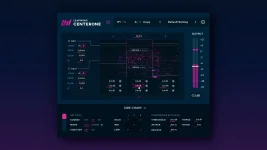
CenterOne 3 gives its two parametric EQ bands separate LR or C assignments, while its multiband section splits L/C/R control across Low, Mid, and High regions. Both can change how a stereo mix feels, but they solve different problems.
Use the EQ when the problem is tonal inside one spatial area. Use multiband control when the balance between Left, Center, and Right needs to change across broad parts of the spectrum. Mixing the jobs up is an easy way to spend ten minutes fixing something the other control could handle faster.
The distinction matters most on a full mix or stem, where one move can touch several instruments at once. CenterOne 3 center and side controls give you more separation than a normal stereo EQ, but the extra options only help if you know whether you are chasing tone or spatial balance.
Say a centered vocal gets edgy around the upper mids while the cymbals and wide ambience already sound fine. A C-zone cut lets you soften the center without dulling the L/R material along with it. Flip the problem around, and an LR-zone boost can add top-end openness to the sides while leaving the centered vocal alone.
The underlying filter behavior is laid out in this digital parametric EQ design paper, but the practical part is simpler. Frequency picks the area, Q decides how much neighborhood comes with it, and Gain does the tonal work.
Narrow problems belong here first. A nasal center, harsh vocal band, boxy side information, or too much brightness around the edges can often be handled without moving the overall L/C/R relationship very far. If you use a huge broad EQ curve just to make the low end feel more centered, you are probably asking EQ to do a multiband job.
This is useful when the stereo balance itself changes with frequency. You might want the bass range tighter and more centered while keeping upper percussion, reverbs, and guitars wider. Another mix may have too much center buildup in the mids but perfectly good low-end focus, so only the Mid C level needs to move.
Crossovers deserve attention. Put one in the wrong place and an instrument can straddle two regions, making it feel less predictable. Auditioning the relevant area before changing levels makes it easier to hear what actually lives inside each band.
Broad spatial moves belong here. A narrow resonance does not. Turning down the entire Mid C region to fix one sharp frequency also lowers every other centered sound living there, which can take body out of a snare, vocal, or keyboard that was never causing trouble.
The reverse can happen too. A side-heavy top end may simply be too bright, so an LR EQ cut solves it without changing width much. If the sides are still genuinely over-prominent after the tone is right, the High L/R levels become the better control.
Static EQ and multiband level moves are poor answers when the problem appears only occasionally. A vocal that collides with the instrumental for three words in a chorus does not need a permanent hole carved into the mix. The published guide to CenterOne 3 sidechain vocal ducking handles that moving problem without turning the whole song into a compromise.
Level-match before deciding which version is better. CenterOne 3 provides output gain and A/B states, so compare changes at similar loudness and listen for what moved besides the thing you meant to fix. If a tonal correction starts changing the whole stereo picture, or a spatial correction starts wrecking an otherwise good tone, the wrong section is probably doing the work.
Use the EQ when the problem is tonal inside one spatial area. Use multiband control when the balance between Left, Center, and Right needs to change across broad parts of the spectrum. Mixing the jobs up is an easy way to spend ten minutes fixing something the other control could handle faster.
The distinction matters most on a full mix or stem, where one move can touch several instruments at once. CenterOne 3 center and side controls give you more separation than a normal stereo EQ, but the extra options only help if you know whether you are chasing tone or spatial balance.
EQ changes tone inside one spatial zone
Each of CenterOne 3's two EQ bands can work on either the combined L/R zone or the extracted C zone. Frequency chooses where the adjustment sits, Gain decides how much gets boosted or cut, and Q controls how broad or narrow the move becomes.Say a centered vocal gets edgy around the upper mids while the cymbals and wide ambience already sound fine. A C-zone cut lets you soften the center without dulling the L/R material along with it. Flip the problem around, and an LR-zone boost can add top-end openness to the sides while leaving the centered vocal alone.
The underlying filter behavior is laid out in this digital parametric EQ design paper, but the practical part is simpler. Frequency picks the area, Q decides how much neighborhood comes with it, and Gain does the tonal work.
Narrow problems belong here first. A nasal center, harsh vocal band, boxy side information, or too much brightness around the edges can often be handled without moving the overall L/C/R relationship very far. If you use a huge broad EQ curve just to make the low end feel more centered, you are probably asking EQ to do a multiband job.
Multiband control changes spatial balance by frequency
The multiband section splits CenterOne 3 into Low, Mid, and High regions using two crossover points. Inside each region, Left, Center, and Right get their own level and mute controls. Moving C in the Low band changes how prominent the extracted center is down there without forcing the same change through the mids and highs.This is useful when the stereo balance itself changes with frequency. You might want the bass range tighter and more centered while keeping upper percussion, reverbs, and guitars wider. Another mix may have too much center buildup in the mids but perfectly good low-end focus, so only the Mid C level needs to move.
Crossovers deserve attention. Put one in the wrong place and an instrument can straddle two regions, making it feel less predictable. Auditioning the relevant area before changing levels makes it easier to hear what actually lives inside each band.
Broad spatial moves belong here. A narrow resonance does not. Turning down the entire Mid C region to fix one sharp frequency also lowers every other centered sound living there, which can take body out of a snare, vocal, or keyboard that was never causing trouble.
Use both only when the mix needs both
A clean workflow is to fix the broad spatial relationship first, then deal with leftover tone. If the low end feels too wide, adjust its L/C/R balance. If the focused result exposes some center mud around one frequency area, use a C-zone EQ band afterward instead of pushing the whole Mid section around.The reverse can happen too. A side-heavy top end may simply be too bright, so an LR EQ cut solves it without changing width much. If the sides are still genuinely over-prominent after the tone is right, the High L/R levels become the better control.
Static EQ and multiband level moves are poor answers when the problem appears only occasionally. A vocal that collides with the instrumental for three words in a chorus does not need a permanent hole carved into the mix. The published guide to CenterOne 3 sidechain vocal ducking handles that moving problem without turning the whole song into a compromise.
Level-match before deciding which version is better. CenterOne 3 provides output gain and A/B states, so compare changes at similar loudness and listen for what moved besides the thing you meant to fix. If a tonal correction starts changing the whole stereo picture, or a spatial correction starts wrecking an otherwise good tone, the wrong section is probably doing the work.