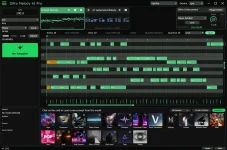
Difro Melody AI 1.2.0 added three post-generation MIDI modifiers called Gate, Arp, and Rhythm, each applied after a melody is generated. The important part is the timing. You are no longer forced to ask the model for another melody just because the notes need a different rhythmic treatment.
Initial Audio describes the three controls as algorithmic after-effects for notes, but the 1.2.0 release notes do not publish parameter-level definitions for each one. So it would be careless to pretend Gate, Arp, and Rhythm have a fully documented set of behaviors already. What is clear is their position in the workflow, with generation happening first and the modifiers operating on the MIDI result you already chose.
This matters because regeneration is a broad move. Difro’s underlying generation system considers melody, rhythm, and harmony, so asking for another result can change several musical properties together. A post-generation modifier is narrower by design, which makes it better suited to the common situation where you like the contour or harmony but dislike how the phrase behaves against the drums.
Gate is the clearest example of why this distinction matters, even though Initial Audio has not published its exact control range. In common MIDI tools, gate time controls note length, while an arpeggiator turns supplied pitches into an ordered rhythmic stream. Difro’s labels point toward different kinds of intervention, but listen to what the control actually does before assuming every familiar gate or arpeggiator convention has been copied.
Rhythm is potentially the more interesting modifier because timing can change the identity of a phrase without replacing its pitches. A note arriving earlier, later, more often, or less often changes the pocket immediately. A 2026 experiment using funk percussion patterns found that syncopation level and tempo both affected reported groove, so rhythmic complexity changes groove perception in ways a simple pitch edit cannot reproduce.
Difro’s release notes do not say whether Rhythm edits onsets, density, accents, subdivisions, or some combination of those variables. Keeping that boundary explicit matters. You can still use the modifier productively by treating it as an audition tool, holding the melodic idea constant, changing the rhythmic treatment, then comparing the result against the same drums and bass instead of changing three things at once.
The same logic applies to Arp. If the modifier increases note activity, it can create collisions with hi-hats, plucks, or another sequenced part even when the melody sounds impressive by itself. A sparse arrangement may welcome the extra motion, while a busy one may expose it as clutter within seconds. Listening in context is faster than deciding from the piano roll alone.
This is where the modifiers become more than novelty buttons. You can generate one phrase, audition it through the instrument you actually plan to use, and alter its behavior before dragging the MIDI into a DAW. Keeping the source melody stable gives you a cleaner comparison because the question becomes whether the treatment improved the phrase, not whether a completely different generation happened to be better.
A sensible order is to start with the least destructive change. Try Gate when articulation is the issue, Rhythm when the pocket is wrong, and Arp when the phrase needs more internal movement, while remembering that Difro’s exact implementations are still only briefly documented. Once a modifier makes the part cooperate with the arrangement, manual piano-roll edits can handle the few notes that still need surgery instead of forcing another full generation.
Initial Audio describes the three controls as algorithmic after-effects for notes, but the 1.2.0 release notes do not publish parameter-level definitions for each one. So it would be careless to pretend Gate, Arp, and Rhythm have a fully documented set of behaviors already. What is clear is their position in the workflow, with generation happening first and the modifiers operating on the MIDI result you already chose.
Post-generation processing changes the workflow
The practical shift in Difro’s post-generation MIDI modifiers is separation between composition and transformation. Difro can still generate or re-imagine a phrase from MIDI, but version 1.2.0 gives you another decision point before export. A promising melody can stay on the table while you test a different treatment of its note events.This matters because regeneration is a broad move. Difro’s underlying generation system considers melody, rhythm, and harmony, so asking for another result can change several musical properties together. A post-generation modifier is narrower by design, which makes it better suited to the common situation where you like the contour or harmony but dislike how the phrase behaves against the drums.
Gate is the clearest example of why this distinction matters, even though Initial Audio has not published its exact control range. In common MIDI tools, gate time controls note length, while an arpeggiator turns supplied pitches into an ordered rhythmic stream. Difro’s labels point toward different kinds of intervention, but listen to what the control actually does before assuming every familiar gate or arpeggiator convention has been copied.
Arp and Rhythm can alter motion without a new melody
An Arp treatment is useful when the pitch material is already strong but feels too static. Conventional MIDI arpeggiators take available notes and distribute them through a repeating order or rate, creating movement from material that may originally have sounded blocky or sustained. In Difro, the useful move is keeping the generated pitch pool while testing whether a more active event pattern fits the production.Rhythm is potentially the more interesting modifier because timing can change the identity of a phrase without replacing its pitches. A note arriving earlier, later, more often, or less often changes the pocket immediately. A 2026 experiment using funk percussion patterns found that syncopation level and tempo both affected reported groove, so rhythmic complexity changes groove perception in ways a simple pitch edit cannot reproduce.
Difro’s release notes do not say whether Rhythm edits onsets, density, accents, subdivisions, or some combination of those variables. Keeping that boundary explicit matters. You can still use the modifier productively by treating it as an audition tool, holding the melodic idea constant, changing the rhythmic treatment, then comparing the result against the same drums and bass instead of changing three things at once.
The same logic applies to Arp. If the modifier increases note activity, it can create collisions with hi-hats, plucks, or another sequenced part even when the melody sounds impressive by itself. A sparse arrangement may welcome the extra motion, while a busy one may expose it as clutter within seconds. Listening in context is faster than deciding from the piano roll alone.
Gate is most useful when note length is the problem
Gate-style processing earns its place when the phrase has the right notes but the articulation feels wrong. Shorter note lengths can make a line feel clipped and percussive, while longer values can let a synth patch overlap or sustain into the next event. The resulting sound also depends on the instrument envelope, so identical MIDI lengths can feel very different on a pluck, pad, bass, or piano.This is where the modifiers become more than novelty buttons. You can generate one phrase, audition it through the instrument you actually plan to use, and alter its behavior before dragging the MIDI into a DAW. Keeping the source melody stable gives you a cleaner comparison because the question becomes whether the treatment improved the phrase, not whether a completely different generation happened to be better.
A sensible order is to start with the least destructive change. Try Gate when articulation is the issue, Rhythm when the pocket is wrong, and Arp when the phrase needs more internal movement, while remembering that Difro’s exact implementations are still only briefly documented. Once a modifier makes the part cooperate with the arrangement, manual piano-roll edits can handle the few notes that still need surgery instead of forcing another full generation.