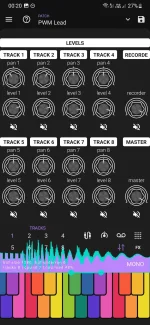
Digitron gives each of its eight tracks a 16-step sequencer with pitch, velocity, gate, retrigger, probability, and Parameter Locks per step. The interesting bit is not the number of controls. It is how differently they treat repetition.
A plain 16-step loop can wear out fast when every pass is identical. Digitron has several ways to stop that happening without turning the sequence into mush. Digitron's eight-track sequencing setup matters here because each track can keep its own synth part while the sequencer changes what individual steps do.
This is different from simply automating everything all the time. A lock belongs to a specific step, so the change is tied to the sequence rather than floating over it as a separate continuous curve. Used sparingly, step-specific synth changes can make a short loop feel arranged before you have built a longer song around it.
Pitch, velocity, and gate already give you plenty before deeper parameter changes enter the picture. Pitch changes the note, velocity changes how hard the event is sent, and gate controls how long the note stays active. Keeping those jobs separate from Parameter Locks makes editing easier because you know whether you are changing the musical event or the sound itself.
A useful starting point is boring on purpose. Write a stable pattern first, then lock one obvious timbral change on a step you can hear clearly. Once the result makes sense, add a second change somewhere less prominent instead of coating all 16 steps in different settings.
Those controls are easy to overuse because the first few minutes can sound impressively busy. Give each one a job instead. Probability works well on secondary notes and accents, while retrigger suits a step that needs a deliberate burst or roll.
Repetition teaches your ear what the loop normally does, so small departures become easier to notice. A 2022 review frames groove around predictability and surprise in rhythmic patterns, with moderate complexity sitting between the dull and the unreadable. Digitron gives you enough independent controls to work inside that middle ground without turning every pass into a dice roll.
Keep the main kick, bass note, or melodic anchor dependable, then let less important events carry the uncertain behavior. A 60 percent decorative hit is more useful when the listener still knows where the center of the pattern lives. Variation has something solid to push against.
Gate length can do quieter work. Shortening one step can make a line feel clipped and percussive, while a longer gate can let another note carry across more space. Pairing a gate change with a Parameter Lock can alter both the duration and character of one event without rewriting the whole track.
This is where a short sequencer stops feeling especially short. Pattern A can establish the core phrase, while Pattern B changes a few gates or velocities. Pattern C can save the more obvious locked parameter move for later in the chain.
You do not need every pattern to announce itself. Tiny differences often do more for a groove than a complete rewrite. Move one pitch, shorten one gate, lower a supporting hit's probability, or add a retrigger near the end of the phrase.
The division is simple in practice. Use Parameter Locks when a particular step should sound different. Use probability for occasional absence, retrigger for repeated activity, and gate or velocity when the note itself needs a different shape or emphasis. Save pattern chains for changes worth keeping as their own repeatable version.
A plain 16-step loop can wear out fast when every pass is identical. Digitron has several ways to stop that happening without turning the sequence into mush. Digitron's eight-track sequencing setup matters here because each track can keep its own synth part while the sequencer changes what individual steps do.
Parameter locks change what one step can mean
Parameter Locks let a synth parameter change on a particular sequencer step. The whole track does not have to sit on one static setting. A bass line can keep the same notes while selected hits open the filter farther, change an envelope value, or take on a more extreme sound.This is different from simply automating everything all the time. A lock belongs to a specific step, so the change is tied to the sequence rather than floating over it as a separate continuous curve. Used sparingly, step-specific synth changes can make a short loop feel arranged before you have built a longer song around it.
Pitch, velocity, and gate already give you plenty before deeper parameter changes enter the picture. Pitch changes the note, velocity changes how hard the event is sent, and gate controls how long the note stays active. Keeping those jobs separate from Parameter Locks makes editing easier because you know whether you are changing the musical event or the sound itself.
A useful starting point is boring on purpose. Write a stable pattern first, then lock one obvious timbral change on a step you can hear clearly. Once the result makes sense, add a second change somewhere less prominent instead of coating all 16 steps in different settings.
Probability and retrigger solve different repetition problems
Probability decides whether a programmed event happens on a given pass. A lower-probability step can disappear sometimes while the rest of the pattern keeps its shape. Retrigger handles a different job by turning one sequencer position into repeated activity rather than a single hit.Those controls are easy to overuse because the first few minutes can sound impressively busy. Give each one a job instead. Probability works well on secondary notes and accents, while retrigger suits a step that needs a deliberate burst or roll.
Repetition teaches your ear what the loop normally does, so small departures become easier to notice. A 2022 review frames groove around predictability and surprise in rhythmic patterns, with moderate complexity sitting between the dull and the unreadable. Digitron gives you enough independent controls to work inside that middle ground without turning every pass into a dice roll.
Keep the main kick, bass note, or melodic anchor dependable, then let less important events carry the uncertain behavior. A 60 percent decorative hit is more useful when the listener still knows where the center of the pattern lives. Variation has something solid to push against.
Gate length can do quieter work. Shortening one step can make a line feel clipped and percussive, while a longer gate can let another note carry across more space. Pairing a gate change with a Parameter Lock can alter both the duration and character of one event without rewriting the whole track.
Pattern chains keep variation deliberate
Digitron supports 16 patterns and pattern chaining, giving variation somewhere to go once a single loop starts getting crowded. Instead of forcing every fill, lock, and probability trick into one 16-step block, you can spread changes across several related patterns. One can stay plain while another carries the busier version.This is where a short sequencer stops feeling especially short. Pattern A can establish the core phrase, while Pattern B changes a few gates or velocities. Pattern C can save the more obvious locked parameter move for later in the chain.
You do not need every pattern to announce itself. Tiny differences often do more for a groove than a complete rewrite. Move one pitch, shorten one gate, lower a supporting hit's probability, or add a retrigger near the end of the phrase.
The division is simple in practice. Use Parameter Locks when a particular step should sound different. Use probability for occasional absence, retrigger for repeated activity, and gate or velocity when the note itself needs a different shape or emphasis. Save pattern chains for changes worth keeping as their own repeatable version.