Amplitude panning changes the level sent to each stereo channel, so relative phase can change without automatically changing the original left-right level ratio. Those are separate controls in the signal, even though your ears combine level and timing cues when deciding where a sound appears.
A phase correction therefore does not have to shove a guitar, synth, or room recording toward the center. If the processor leaves the channel levels alone and changes only their phase relationship, a level-panned source can keep the same electrical balance between left and right.
Phase is another property. Two channels can keep the same levels while their waveforms shift relative to each other, and the mono sum can change dramatically even though the faders never move. Frequencies that once reinforced can weaken, while frequencies already close to opposition can recover when their relative phase becomes more favorable.
The distinction is visible in controlled stereo localization tests that separately examine interchannel level and time differences with musical sources. Level panning remained comparatively robust across the tested material, while time-based panning behaved differently with some source types. For a mix engineer, the useful point is narrower. Level and timing can both influence location without being the same control.
A processor can exploit that separation. If it improves destructive left-right phase while preserving the channel-level relationship, the original level-based pan can remain substantially intact. The mono sum gets a chance to recover without the usual bargain of pulling the whole image toward the middle.
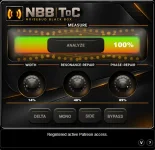
Noisebud describes phase repair for mono compatibility as reducing destructive interchannel phase while preserving the level relationship between left and right. The wording matters because it does not promise to freeze every perceptual detail of the stereo image. It means the level-derived part of the pan does not need to be rewritten just to improve summing.
A wide double-tracked guitar is a useful case. One side may already be louder because of the mix balance, while similar frequency content across both channels arrives with an awkward phase relationship. Correcting part of that relationship can strengthen the mono sum without equalizing the channel levels or forcing both performances toward center.
Frequency selectivity matters too. A broadband phase change can disturb relationships that were never causing trouble, while a localized repair can leave stable regions alone. Mono compatibility often fails in bands rather than across the entire signal, especially when microphones, short delays, stereo effects, or layered performances create different timing relationships at different frequencies.
Change the timing relationship, and you may change both mono cancellation and perceived location. A Haas-style effect is the obvious example. Its width depends on arrival-time differences, so repairing the phase consequences can also reduce or reshape the spatial effect that created them.
Recorded stereo can behave the same way for less obvious reasons. Spaced microphones capture genuine arrival-time differences, room reflections add more, and modulation effects keep moving phase over time. Preserving channel levels in those cases does not guarantee that every spatial cue remains perceptually identical after correction.
Preserving a level ratio protects level-based panning, not every possible ingredient of stereo localization. If timing or phase is doing part of the positioning work, changing it may alter width, depth, or apparent location even when the meters show the same left-right balance.
Judge the repair with both stereo and mono playback. Listen for a stronger, less hollow fold-down, then switch back and check whether the source still occupies the intended place. A useful correction fixes the destructive relationship without pretending phase is invisible to the stereo image.
A phase correction therefore does not have to shove a guitar, synth, or room recording toward the center. If the processor leaves the channel levels alone and changes only their phase relationship, a level-panned source can keep the same electrical balance between left and right.
Level panning and phase occupy different controls
Picture a mono guitar panned left with ordinary amplitude panning. The mixer sends more of the signal to the left channel and less to the right, creating a level difference that establishes its position in the stereo image. Move the pan control, and you change that ratio.Phase is another property. Two channels can keep the same levels while their waveforms shift relative to each other, and the mono sum can change dramatically even though the faders never move. Frequencies that once reinforced can weaken, while frequencies already close to opposition can recover when their relative phase becomes more favorable.
The distinction is visible in controlled stereo localization tests that separately examine interchannel level and time differences with musical sources. Level panning remained comparatively robust across the tested material, while time-based panning behaved differently with some source types. For a mix engineer, the useful point is narrower. Level and timing can both influence location without being the same control.
A processor can exploit that separation. If it improves destructive left-right phase while preserving the channel-level relationship, the original level-based pan can remain substantially intact. The mono sum gets a chance to recover without the usual bargain of pulling the whole image toward the middle.
Phase repair is not the same as repanning
Repanning changes how much signal reaches each channel. Phase repair changes how corresponding waveform components line up between channels, often differently across frequency when the problem is more complicated than a polarity flip. Those operations can produce very different results even when both make the mono version sound stronger.Noisebud describes phase repair for mono compatibility as reducing destructive interchannel phase while preserving the level relationship between left and right. The wording matters because it does not promise to freeze every perceptual detail of the stereo image. It means the level-derived part of the pan does not need to be rewritten just to improve summing.
A wide double-tracked guitar is a useful case. One side may already be louder because of the mix balance, while similar frequency content across both channels arrives with an awkward phase relationship. Correcting part of that relationship can strengthen the mono sum without equalizing the channel levels or forcing both performances toward center.
Frequency selectivity matters too. A broadband phase change can disturb relationships that were never causing trouble, while a localized repair can leave stable regions alone. Mono compatibility often fails in bands rather than across the entire signal, especially when microphones, short delays, stereo effects, or layered performances create different timing relationships at different frequencies.
Timing-based width needs more caution
Level-based panning is the cleanest case because the location cue at the mixer output lives in the left-right gain relationship. Time-based stereo complicates the picture. A short delay between channels can itself be part of the reason a sound appears wide or pulls toward one side.Change the timing relationship, and you may change both mono cancellation and perceived location. A Haas-style effect is the obvious example. Its width depends on arrival-time differences, so repairing the phase consequences can also reduce or reshape the spatial effect that created them.
Recorded stereo can behave the same way for less obvious reasons. Spaced microphones capture genuine arrival-time differences, room reflections add more, and modulation effects keep moving phase over time. Preserving channel levels in those cases does not guarantee that every spatial cue remains perceptually identical after correction.
Preserving a level ratio protects level-based panning, not every possible ingredient of stereo localization. If timing or phase is doing part of the positioning work, changing it may alter width, depth, or apparent location even when the meters show the same left-right balance.
Judge the repair with both stereo and mono playback. Listen for a stronger, less hollow fold-down, then switch back and check whether the source still occupies the intended place. A useful correction fixes the destructive relationship without pretending phase is invisible to the stereo image.