Antares currently sells three main AutoTune pitch-correction paths, with AutoTune, AutoTune Advanced, and AutoTune Pro 11 aimed at increasingly different workflows. AutoTune is the streamlined automatic tuner, Advanced adds deeper real-time control, and Pro 11 remains the option with detailed graphical pitch and time editing.
The AutoTune Advanced DVA vibrato engine is the clearest new dividing line because Advanced can preserve, reduce, or boost detected natural vibrato while it corrects pitch. The AutoTune Advanced vs Pro choice is therefore less about one plugin replacing another and more about whether most of your work happens during automatic correction or after the take.
AutoTune 2026 was renamed simply AutoTune on September 24, 2026, so older Antares AutoTune 2026 vs AutoTune Pro 11 comparisons now use a retired product name for the same streamlined plugin. The older AutoTune 2026 lineup is still useful context, but Advanced has inserted a new middle path between simplicity and manual editing.
A useful AutoTune Advanced tutorial should separate preserving vibrato from generating it. DVA follows the singer’s existing movement, while Vibrato FX creates new modulation, so natural vibrato preservation is a different job from adding an effect after the performance is already stable. The distinction matters most when fast correction would otherwise make held notes feel unnaturally rigid.
Formant Designer changes another part of the voice. Pitch moves the musical note, while formants shape the resonant character of the vocal, which is why pitch and formant shifting should not be treated as interchangeable controls. Advanced also lets incoming MIDI notes become tuning targets, making it much more useful for live or prewritten melodic control than the streamlined AutoTune edition.
Whether Antares AutoTune is worth it at this level depends on whether those controls solve problems you actually hear. AutoTune Advanced is compatible with major desktop DAWs and supports VST3, AU, and AAX, so the buying decision is usually about workflow rather than plug-in format.
The practical split resembles real-time correction and offline note editing. Advanced is built to make the automatic pass more expressive and controllable, while Pro 11 lets you zoom into a phrase and decide what should happen to individual pitch contours and timing events. If one syllable drifts, one transition lands badly, or a note needs surgery instead of global correction, Graph Mode is the relevant tool.
Whether AutoTune Pro 11 is worth it comes down to how often you need that second stage. What AutoTune professionals use varies for exactly this reason, since a tracking-heavy session can favor Advanced while an editor who regularly reshapes recorded vocals may spend far more time in Pro 11.
AutoTune Pro 11 is not subscription-only. Antares still offers individual perpetual purchases alongside AutoTune Unlimited, while a free trial exists for evaluation rather than a permanent free Pro tier. Older AutoTune Pro versus Artist and AutoTune Pro versus Access comparisons are poor current buying guides because Artist is legacy and Access now sits outside the main three-product pitch-correction lineup.
Choose Advanced when your recurring problem is vibrato preservation, live monitoring, MIDI-driven targets, deeper note selection, or formant shaping inside an automatic workflow. Choose Pro 11 when manual pitch and timing work, Graph Mode, ARA2, or harmony generation is the reason you are paying for the larger toolset.
AutoTune Unlimited is the subscription route if you want access to the broader Antares collection instead of buying one edition outright. Whether AutoTune Unlimited is worth it depends less on the AutoTune name and more on how many of the included pitch, vocal-chain, and creative tools you will actually use.
The best AutoTune version is therefore not the one with the longest feature list. A producer who never opens Graph Mode gains little from buying Pro 11 for status, while someone who routinely repairs notes by hand will hit Advanced’s automatic-workflow boundary quickly. The cleaner purchase is the edition that matches where your vocal decisions happen.
The AutoTune Advanced DVA vibrato engine is the clearest new dividing line because Advanced can preserve, reduce, or boost detected natural vibrato while it corrects pitch. The AutoTune Advanced vs Pro choice is therefore less about one plugin replacing another and more about whether most of your work happens during automatic correction or after the take.
AutoTune 2026 was renamed simply AutoTune on September 24, 2026, so older Antares AutoTune 2026 vs AutoTune Pro 11 comparisons now use a retired product name for the same streamlined plugin. The older AutoTune 2026 lineup is still useful context, but Advanced has inserted a new middle path between simplicity and manual editing.
AutoTune Advanced is the real-time control option
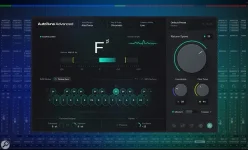
AutoTune Advanced settings start from the same core ideas as regular AutoTune, including Retune Speed, Humanize, Flex Tune, key, scale, and vocal range. Advanced adds DVA, Vibrato FX, a 78-note Visual Keyboard, MIDI Perform, Formant Designer, and a Live mode that Antares specifies at under one millisecond from 44.1 to 192 kHz.A useful AutoTune Advanced tutorial should separate preserving vibrato from generating it. DVA follows the singer’s existing movement, while Vibrato FX creates new modulation, so natural vibrato preservation is a different job from adding an effect after the performance is already stable. The distinction matters most when fast correction would otherwise make held notes feel unnaturally rigid.
Formant Designer changes another part of the voice. Pitch moves the musical note, while formants shape the resonant character of the vocal, which is why pitch and formant shifting should not be treated as interchangeable controls. Advanced also lets incoming MIDI notes become tuning targets, making it much more useful for live or prewritten melodic control than the streamlined AutoTune edition.
Whether Antares AutoTune is worth it at this level depends on whether those controls solve problems you actually hear. AutoTune Advanced is compatible with major desktop DAWs and supports VST3, AU, and AAX, so the buying decision is usually about workflow rather than plug-in format.
Pro 11 still owns the detailed editing job
AutoTune Pro 11 combines real-time Auto Mode with Graph Mode, where pitch and timing can be edited after audio has been captured. It also keeps Time Correction, ARA2 support in compatible DAWs, and the four-part Harmony Player, features Advanced does not replace.The practical split resembles real-time correction and offline note editing. Advanced is built to make the automatic pass more expressive and controllable, while Pro 11 lets you zoom into a phrase and decide what should happen to individual pitch contours and timing events. If one syllable drifts, one transition lands badly, or a note needs surgery instead of global correction, Graph Mode is the relevant tool.
Whether AutoTune Pro 11 is worth it comes down to how often you need that second stage. What AutoTune professionals use varies for exactly this reason, since a tracking-heavy session can favor Advanced while an editor who regularly reshapes recorded vocals may spend far more time in Pro 11.
AutoTune Pro 11 is not subscription-only. Antares still offers individual perpetual purchases alongside AutoTune Unlimited, while a free trial exists for evaluation rather than a permanent free Pro tier. Older AutoTune Pro versus Artist and AutoTune Pro versus Access comparisons are poor current buying guides because Artist is legacy and Access now sits outside the main three-product pitch-correction lineup.
Buy for the edit you actually perform
The version of AutoTune you should get becomes clearer once you identify the edit that keeps repeating. Choose regular AutoTune when you mainly need quick automatic correction with Retune Speed, Humanize, Flex Tune, key and scale control, plus low-latency or high-quality processing without the extra Advanced panels.Choose Advanced when your recurring problem is vibrato preservation, live monitoring, MIDI-driven targets, deeper note selection, or formant shaping inside an automatic workflow. Choose Pro 11 when manual pitch and timing work, Graph Mode, ARA2, or harmony generation is the reason you are paying for the larger toolset.
AutoTune Unlimited is the subscription route if you want access to the broader Antares collection instead of buying one edition outright. Whether AutoTune Unlimited is worth it depends less on the AutoTune name and more on how many of the included pitch, vocal-chain, and creative tools you will actually use.
The best AutoTune version is therefore not the one with the longest feature list. A producer who never opens Graph Mode gains little from buying Pro 11 for status, while someone who routinely repairs notes by hand will hit Advanced’s automatic-workflow boundary quickly. The cleaner purchase is the edition that matches where your vocal decisions happen.