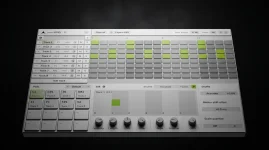
omniGRID can shift each track by up to 64 ms while applying one of eight shuffle modes globally or per track. Both controls move notes away from rigid grid timing, but they do not solve the same rhythmic problem.
Shuffle changes the spacing pattern between steps. Timing shift moves a track, or an individual step, earlier or later without redefining the underlying subdivision. Treating those controls as interchangeable is an easy way to turn a tight groove into a pile of slightly misplaced hits.
The useful starting point is to leave your kick or another obvious pulse alone, then decide what needs a different relationship to it. The omniGRID 16-track sequencing system gives each lane enough independence to make those relationships deliberate rather than global accidents.
A global setting is the faster choice when several parts should breathe together. If the hats, clap, and percussion are meant to share one pocket, a common shuffle profile keeps their timing relationship coherent while changing how they sit against the straight grid.
Per-track shuffle is more useful when one layer should bend while another stays firm. A straight kick underneath shuffled hats gives the ear a stable reference. Giving every lane a different groove profile can make the downbeat harder to feel.
Research is awkwardly unsentimental here. In controlled listening tests of musical microtiming, exaggerated timing deviations reduced groove ratings, while quantized performances and the musicians' original microtiming could both score highly. Small deviations can work, but looseness has no automatic musical value.
omniGRID gives track timing a wide ±64 ms range, although most useful corrections will usually live far inside those extremes. The normal adjustment resolution is 0.2 ms, and holding the Shift modifier while dragging tightens it to 0.02 ms. Fine control matters most when you are correcting relationships rather than trying to hear every numerical increment in isolation.
Per-step timing goes another level deeper. You can leave a lane in place, then nudge one snare ghost note, hat, or repeated accent without moving the rest of the pattern. This works well when the phrase needs one deliberate push or drag rather than a permanent offset across every step.
Negative shifts need a practical check at the start of playback. A first step moved before the transport start has nowhere to go. omniGRID can therefore skip it when playback begins or when a loop jumps back to its start.
Test the routing before making larger offsets. Send a plain pattern through the same instrument, apply an obvious timing change, and confirm the receiving plugin or hardware preserves those note positions. Once the timing survives the path, reduce the offset until it sits naturally instead of leaving the exaggerated test value in place.
The same discipline helps when several layers are involved. Keep one dependable reference part and change only one timing mechanism at a time. Listen to the relationship between sounds instead of staring at the millisecond value.
Shuffle should reshape repeated spacing, track shift should reposition a whole lane, and per-step shift should repair or stylize individual events. Stacking all three can work, but the order matters. Start with the broad groove profile, place each lane against the anchor, then touch individual steps where the phrase still feels stiff or awkward.
A receiving instrument deserves one final check after export or routing changes. MIDI that feels loose inside omniGRID can become rigid again if another stage quantizes note starts. Fix the stage doing the snapping instead of compensating with increasingly extreme shifts upstream.
Shuffle changes the spacing pattern between steps. Timing shift moves a track, or an individual step, earlier or later without redefining the underlying subdivision. Treating those controls as interchangeable is an easy way to turn a tight groove into a pile of slightly misplaced hits.
The useful starting point is to leave your kick or another obvious pulse alone, then decide what needs a different relationship to it. The omniGRID 16-track sequencing system gives each lane enough independence to make those relationships deliberate rather than global accidents.
Shuffle changes the shape of repeated subdivisions
Shuffle is strongest when the pattern needs a recurring lean instead of a one-off correction. Apply it to hats, percussion, bass notes, or an entire pattern when you want repeated subdivisions to stop landing with perfectly even spacing. omniGRID can apply a groove globally or let individual tracks use their own shuffle treatment.A global setting is the faster choice when several parts should breathe together. If the hats, clap, and percussion are meant to share one pocket, a common shuffle profile keeps their timing relationship coherent while changing how they sit against the straight grid.
Per-track shuffle is more useful when one layer should bend while another stays firm. A straight kick underneath shuffled hats gives the ear a stable reference. Giving every lane a different groove profile can make the downbeat harder to feel.
Research is awkwardly unsentimental here. In controlled listening tests of musical microtiming, exaggerated timing deviations reduced groove ratings, while quantized performances and the musicians' original microtiming could both score highly. Small deviations can work, but looseness has no automatic musical value.
Timing shift fixes relationships that shuffle cannot
Track shift is better when the rhythmic pattern itself is fine, but one sound feels early or late against another. Moving a clap slightly behind the kick can change the pocket without rewriting every sixteenth-note interval in the clap pattern. Pushing percussion forward can create urgency while the rest of the beat stays where it was.omniGRID gives track timing a wide ±64 ms range, although most useful corrections will usually live far inside those extremes. The normal adjustment resolution is 0.2 ms, and holding the Shift modifier while dragging tightens it to 0.02 ms. Fine control matters most when you are correcting relationships rather than trying to hear every numerical increment in isolation.
Per-step timing goes another level deeper. You can leave a lane in place, then nudge one snare ghost note, hat, or repeated accent without moving the rest of the pattern. This works well when the phrase needs one deliberate push or drag rather than a permanent offset across every step.
Negative shifts need a practical check at the start of playback. A first step moved before the transport start has nowhere to go. omniGRID can therefore skip it when playback begins or when a loop jumps back to its start.
Downstream quantization can quietly erase the work
The most confusing timing problem can happen outside omniGRID. Rapid Flow warns that an instrument receiving its MIDI may quantize incoming notes, which can interfere with timing shift and shuffle. You can shape a pocket carefully and hear little change because another device is snapping the events back toward its own grid.Test the routing before making larger offsets. Send a plain pattern through the same instrument, apply an obvious timing change, and confirm the receiving plugin or hardware preserves those note positions. Once the timing survives the path, reduce the offset until it sits naturally instead of leaving the exaggerated test value in place.
The same discipline helps when several layers are involved. Keep one dependable reference part and change only one timing mechanism at a time. Listen to the relationship between sounds instead of staring at the millisecond value.
Shuffle should reshape repeated spacing, track shift should reposition a whole lane, and per-step shift should repair or stylize individual events. Stacking all three can work, but the order matters. Start with the broad groove profile, place each lane against the anchor, then touch individual steps where the phrase still feels stiff or awkward.
A receiving instrument deserves one final check after export or routing changes. MIDI that feels loose inside omniGRID can become rigid again if another stage quantizes note starts. Fix the stage doing the snapping instead of compensating with increasingly extreme shifts upstream.