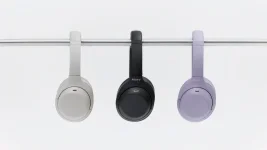
Sony rates the WH-CH530 for 55 hours of music playback, five hours longer than the WH-CH520 it replaces. The gain is useful, but it is not the main reason the newer pair feels different. Sony left the basic on-ear formula almost untouched.
The WH-CH530 weighs about 150 grams, compared with roughly 147 grams for the WH-CH520, and neither model folds or offers a wired audio input. Both keep physical buttons, USB-C charging, DSEE processing, multipoint, and a lightweight plastic build aimed at everyday listening rather than premium materials. Familiar hardware, mostly.
The bigger changes sit inside Sony’s 2026 budget headphone refresh, where the CH530 moves to Bluetooth 6.0 and gains LC3 through LE Audio. If your CH520 still works well, those connection features matter more than the extra five hours printed on the box.
LE Audio is not simply enabled because both devices support Bluetooth. Sony’s current setup can require changing the connection preference in Sound Connect, deleting the existing pairing, pairing again, and confirming LE Audio on the phone. Some headset features may also stop working while the lower-latency mode is active.
Auracast comes with the newer platform too, letting the CH530 receive compatible broadcast audio where supporting transmitters are available. The CH520 cannot do the same through a firmware toggle because its published codec and connection support stop at the older Classic Audio setup. Whether you benefit today depends heavily on the phones, TVs, computers, and public transmitters around you.
Multipoint remains on both generations, so ordinary switching between a laptop and phone is not a new reason to upgrade. Fast Pair also keeps the basic Android setup painless. The CH530 expands what the headphones can connect to and how they can receive audio, rather than fixing a broken everyday pairing system.
A Gaming EQ preset joins the newer software, but the more practical addition may be maximum-volume control. You can set a ceiling inside the app instead of relying entirely on the playback device’s volume slider. High-volume personal listening exposure has a well-established relationship with hearing risk, so a persistent cap has a purpose beyond adding another menu item.
Neither model suddenly becomes a wired travel headset. Sony lists no analog input on the CH520, while the CH530’s USB-C port is for charging rather than USB audio. If the battery is empty or an airplane seat only offers a headphone jack, both models leave you without a direct cable fallback.
Call endurance moves the other way. Sony rates the WH-CH530 for up to 35 hours of continuous communication, while the WH-CH520 specification lists up to 40 hours. Someone who spends all day in calls can therefore buy the newer model and receive a lower official figure in the exact workload that matters most.
The trade is easy to miss because most launch coverage leads with music battery life, Bluetooth 6.0, and improved processing. It also changes the upgrade calculation. A CH520 owner who mostly listens to playlists gets modestly longer runtime, while someone buying for work calls should not assume every battery metric improved.
The WH-CH530 makes the strongest case when you actually want LE Audio, LC3, Auracast, finer EQ control, or the app-level volume ceiling. Existing CH520 owners who use SBC or AAC, depend on multipoint, and rarely touch EQ will find much of the daily experience familiar. Five more hours alone is a thin reason to replace a healthy pair.
The WH-CH530 weighs about 150 grams, compared with roughly 147 grams for the WH-CH520, and neither model folds or offers a wired audio input. Both keep physical buttons, USB-C charging, DSEE processing, multipoint, and a lightweight plastic build aimed at everyday listening rather than premium materials. Familiar hardware, mostly.
The bigger changes sit inside Sony’s 2026 budget headphone refresh, where the CH530 moves to Bluetooth 6.0 and gains LC3 through LE Audio. If your CH520 still works well, those connection features matter more than the extra five hours printed on the box.
The familiar design hides a much newer connection stack
The WH-CH520 uses Bluetooth 5.2 with SBC and AAC for music. The WH-CH530 moves to Bluetooth 6.0, keeps SBC and AAC for conventional Bluetooth playback, then adds LC3 when you switch to LE Audio on a compatible Android device. It is a genuine capability change rather than a renamed codec setting.LE Audio is not simply enabled because both devices support Bluetooth. Sony’s current setup can require changing the connection preference in Sound Connect, deleting the existing pairing, pairing again, and confirming LE Audio on the phone. Some headset features may also stop working while the lower-latency mode is active.
Auracast comes with the newer platform too, letting the CH530 receive compatible broadcast audio where supporting transmitters are available. The CH520 cannot do the same through a firmware toggle because its published codec and connection support stop at the older Classic Audio setup. Whether you benefit today depends heavily on the phones, TVs, computers, and public transmitters around you.
Multipoint remains on both generations, so ordinary switching between a laptop and phone is not a new reason to upgrade. Fast Pair also keeps the basic Android setup painless. The CH530 expands what the headphones can connect to and how they can receive audio, rather than fixing a broken everyday pairing system.
The software controls change more than the sound hardware
Sony kept the 30 mm driver size, so the CH530 is not selling a dramatic mechanical redesign behind the ear pads. Current testing instead points to updated processing and a broader set of controls in Sound Connect. The equalizer grows from five adjustable bands on the CH520 to ten on the CH530, giving you finer control when the stock balance is not quite right.A Gaming EQ preset joins the newer software, but the more practical addition may be maximum-volume control. You can set a ceiling inside the app instead of relying entirely on the playback device’s volume slider. High-volume personal listening exposure has a well-established relationship with hearing risk, so a persistent cap has a purpose beyond adding another menu item.
Neither model suddenly becomes a wired travel headset. Sony lists no analog input on the CH520, while the CH530’s USB-C port is for charging rather than USB audio. If the battery is empty or an airplane seat only offers a headphone jack, both models leave you without a direct cable fallback.
Battery life improves for music but slips for calls
The headline battery change favors the CH530. Sony claims up to 55 hours of continuous music playback, compared with the widely quoted 50-hour figure for the CH520, and the newer model still takes about three hours for a full charge. For casual listening, five extra hours is welcome rather than transformative.Call endurance moves the other way. Sony rates the WH-CH530 for up to 35 hours of continuous communication, while the WH-CH520 specification lists up to 40 hours. Someone who spends all day in calls can therefore buy the newer model and receive a lower official figure in the exact workload that matters most.
The trade is easy to miss because most launch coverage leads with music battery life, Bluetooth 6.0, and improved processing. It also changes the upgrade calculation. A CH520 owner who mostly listens to playlists gets modestly longer runtime, while someone buying for work calls should not assume every battery metric improved.
The WH-CH530 makes the strongest case when you actually want LE Audio, LC3, Auracast, finer EQ control, or the app-level volume ceiling. Existing CH520 owners who use SBC or AAC, depend on multipoint, and rarely touch EQ will find much of the daily experience familiar. Five more hours alone is a thin reason to replace a healthy pair.