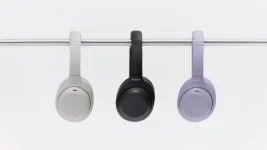
Sony rates the WH-CH730N for 50 hours with noise canceling on, up from 35 hours on the WH-CH720N. The newer pair also stretches to 75 hours with ANC disabled, versus 50 hours on its predecessor, while full charging drops from roughly three and a half hours to about three.
Those numbers make the WH-CH730N look like a straightforward battery upgrade, but the useful differences go further. Inside Sony’s latest wireless headphone refresh, the 730N gains a folding design, Bluetooth 6.0, LC3 support through LE Audio, and newer software support while adding 15 grams to the old chassis weight.
An odd detail sits underneath those improved music figures. Sony rates continuous call time exactly the same on both generations at 35 hours with noise canceling on and 40 hours with it off, so the battery gains are not universal across every operating mode. Anyone living in Teams, Zoom, or phone calls should not assume the headline 75-hour figure applies to their workday.
Portability improves even though weight moves backward. The WH-CH720N weighs about 192 grams and does not fold inward, while the WH-CH730N weighs around 207 grams but gains a proper folding structure. Fifteen extra grams is easy to notice on paper, yet a smaller shape inside a backpack can matter more than winning the scale by a tiny margin.
Both generations keep physical controls and the supplied analog cable, so the redesign does not force you to relearn basic operation. The change is mostly about storage.
LE Audio is not automatically active after pairing. Sony’s setup can involve changing the connection mode in Sound Connect, deleting the existing pairing, reconnecting the headphones, and confirming LE Audio on the phone. The payoff is lower-latency LC3 playback, but some headset functions become unavailable while that mode is active.
A connection upgrade is useful only when the source device supports it, so an older phone may make the 730N behave much more like the 720N. Multipoint remains available for ordinary daily switching, and both models keep the 3.5 mm input for wired listening. The newer wireless stack adds options rather than replacing the old escape routes.
Recent lab measurements put the WH-CH730N in respectable budget ANC territory, but they also expose a weak patch through roughly 300 to 1000 Hz. Voices, mechanical squeals, and other midrange distractions can remain more obvious than low-frequency rumble. The newer model therefore does not behave like a miniature WH-1000XM flagship just because the battery and radio moved forward.
The older WH-CH720N has its own uneven cancellation profile, with independent testing finding weaker control over deep bass noise and better results higher up the spectrum. Comparing the two is less tidy than comparing battery figures because each model leaves different parts of the outside world poking through. Fit can shift the result again.
Software support creates a quieter long-term difference. Sony currently lists security-update support for the WH-CH720N through March 3, 2027, while the WH-CH730N is listed through September 6, 2030. For someone buying fresh hardware in 2026, those extra years matter more than they would to an existing 720N owner whose headphones already work well.
The upgrade case is strongest when battery life, folding portability, LE Audio, or longer support directly fixes something you dislike about the WH-CH720N. Sound and ANC don't change much, and the newer pair is slightly heavier. Replacing a healthy 720N purely for a newer model number leaves most of Sony’s basic midrange formula unchanged.
Those numbers make the WH-CH730N look like a straightforward battery upgrade, but the useful differences go further. Inside Sony’s latest wireless headphone refresh, the 730N gains a folding design, Bluetooth 6.0, LC3 support through LE Audio, and newer software support while adding 15 grams to the old chassis weight.
The biggest upgrade is what happens away from a charger
The WH-CH720N was already easy to live with because 35 hours of rated ANC playback covered several workdays or a long trip. Moving to 50 hours changes charging from a regular habit into something you can forget for longer, especially if you use the headphones for a few hours at a time. Turning ANC off pushes the gap even wider.An odd detail sits underneath those improved music figures. Sony rates continuous call time exactly the same on both generations at 35 hours with noise canceling on and 40 hours with it off, so the battery gains are not universal across every operating mode. Anyone living in Teams, Zoom, or phone calls should not assume the headline 75-hour figure applies to their workday.
Portability improves even though weight moves backward. The WH-CH720N weighs about 192 grams and does not fold inward, while the WH-CH730N weighs around 207 grams but gains a proper folding structure. Fifteen extra grams is easy to notice on paper, yet a smaller shape inside a backpack can matter more than winning the scale by a tiny margin.
Both generations keep physical controls and the supplied analog cable, so the redesign does not force you to relearn basic operation. The change is mostly about storage.
Bluetooth 6.0 adds a real feature instead of a badge
The WH-CH720N uses Bluetooth 5.2 and Sony officially lists SBC and AAC for wireless audio. The WH-CH730N moves to Bluetooth 6.0 and adds LC3 when you switch it into LE Audio mode with a compatible Android device. Classic Audio still uses SBC or AAC.LE Audio is not automatically active after pairing. Sony’s setup can involve changing the connection mode in Sound Connect, deleting the existing pairing, reconnecting the headphones, and confirming LE Audio on the phone. The payoff is lower-latency LC3 playback, but some headset functions become unavailable while that mode is active.
A connection upgrade is useful only when the source device supports it, so an older phone may make the 730N behave much more like the 720N. Multipoint remains available for ordinary daily switching, and both models keep the 3.5 mm input for wired listening. The newer wireless stack adds options rather than replacing the old escape routes.
Noise canceling improves less cleanly than battery life
Sony still uses its Dual Noise Sensor approach, and both generations place microphones around the earcups to feed the cancellation system. The underlying idea behind adaptive headphone noise cancellation is mature, which makes implementation, fit, and tuning more important than simply counting microphones.Recent lab measurements put the WH-CH730N in respectable budget ANC territory, but they also expose a weak patch through roughly 300 to 1000 Hz. Voices, mechanical squeals, and other midrange distractions can remain more obvious than low-frequency rumble. The newer model therefore does not behave like a miniature WH-1000XM flagship just because the battery and radio moved forward.
The older WH-CH720N has its own uneven cancellation profile, with independent testing finding weaker control over deep bass noise and better results higher up the spectrum. Comparing the two is less tidy than comparing battery figures because each model leaves different parts of the outside world poking through. Fit can shift the result again.
Software support creates a quieter long-term difference. Sony currently lists security-update support for the WH-CH720N through March 3, 2027, while the WH-CH730N is listed through September 6, 2030. For someone buying fresh hardware in 2026, those extra years matter more than they would to an existing 720N owner whose headphones already work well.
The upgrade case is strongest when battery life, folding portability, LE Audio, or longer support directly fixes something you dislike about the WH-CH720N. Sound and ANC don't change much, and the newer pair is slightly heavier. Replacing a healthy 720N purely for a newer model number leaves most of Sony’s basic midrange formula unchanged.